






















Introduction – Are Gas Stoves Becoming Optional?
For most Indian households, the gas stove is still the center of everyday cooking. It is reliable, familiar, and versatile. From boiling milk in the morning to making dal, sabzi, rice, rotis, and evening chai, the LPG stove has shaped the rhythm of Indian kitchens for decades.
At the same time, kitchen habits are changing. Domestic LPG remains deeply embedded in Indian homes, but it is also a recurring household expense, and PPAC data shows domestic packed LPG continues to dominate India’s LPG consumption. IndianOil also notes that Indane alone serves nearly 170 million kitchens.
This is exactly why more families are now looking at electric cooking appliances not as luxury add-ons, but as practical tools. Urban apartments are becoming more compact. Ventilation can be limited. Working professionals want less supervision while cooking. Health-conscious households want to cut oil without giving up texture. And beginners often feel more comfortable using a timer-based appliance than cooking over an open flame.
That is where the air fryer oven enters the conversation.
It promises crisp food with less oil, less standing near the stove, and fewer messy frying sessions. But the real question is not whether an air fryer oven is useful. It clearly is. The real question is whether it can replace a gas stove in an Indian kitchen.
The honest answer is: not fully.
But that does not make it less valuable. In many homes, the better question is this: How much of your gas stove’s daily workload can an air fryer oven realistically take over?
That is the practical lens this guide uses.
Before answering that in detail, let’s first understand what an air fryer oven actually is. Air fryers work by circulating hot air around food, essentially functioning like a compact convection cooking system, and health sources consistently note that they usually need far less oil than deep frying.
What Is an Air Fryer Oven?
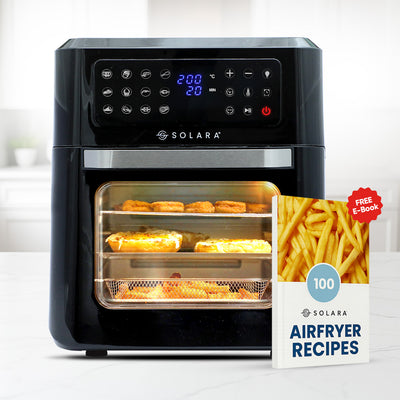
An air fryer oven is an electric cooking appliance that uses rapid hot air circulation inside a compact chamber. Instead of cooking over direct flame, it uses a heating element and a fan to move hot air around the food. That strong airflow helps the surface dry and brown, which is what gives food that crisp, roasted texture people associate with frying or grilling.In simple terms, it cooks food by circulating hot air instead of placing it over a flame.
That is why an air fryer oven is often described as a mini convection oven with stronger, more focused airflow. It is especially effective for foods that benefit from surface crisping: vegetables, cutlets, paneer, fish, chicken, frozen snacks, breads, and reheated leftovers that would otherwise become soggy in a microwave.
An air fryer oven is not a pressure cooker, not a kadai, and not a replacement for all stovetop tasks. It is a specialized appliance that performs best when the cooking style is dry, semi-dry, roasted, baked, or grilled.
That distinction matters a lot in Indian kitchens.
What Is an Air Fryer Oven Used For?
In day-to-day use, an air fryer oven is most useful for cooking jobs that are repetitive, messy, or oil-heavy on the stove.
Its most common uses include:
Roasting vegetables such as cauliflower, potatoes, carrots, beans, sweet potatoes, and mixed sabzi.
- Grilling paneer, tofu, chicken, and fish.
- Baking quick snacks and small meals.
- Air frying frozen foods like nuggets, fries, smileys, and ready-to-cook snacks.
- Reheating leftovers while keeping them crisp.
- Toasting bread, buns, and sandwiches.
- Roasting nuts and makhana.
- Preparing evening snacks without deep frying.
This means the air fryer oven handles dry and semi-dry cooking very well. If you want roasted gobi, paneer tikka, chicken wings, stuffed mushrooms, or crisp leftover cutlets, it can do that beautifully.
But if you want dal tadka, sambhar, rasam, rajma, kadhi, boiling rice, or pressure-cooked chana, the air fryer oven is simply not the right tool.
So the appliance is highly useful, but it has a clear zone of strength.
Who Is It Best For?
An air fryer oven is not equally transformative for every household. Its value depends on who is cooking, what they cook most often, and how the kitchen is used.
Singles and working professionals
This group benefits the most. Portion-based cooking, minimal supervision, fast cleanup, and easy reheating make the appliance ideal for weekday life. A quick paneer bowl, roasted vegetables, toasted sandwich, or frozen snack becomes much easier.
Small families
For couples or small families, an air fryer oven works well for evening snacks, side dishes, light dinners, and healthier versions of fried foods. It reduces the need to deep fry frequently and can handle small-to-moderate portions efficiently.
Health-conscious individuals
Because air fryers can produce crisp textures with much less oil than deep frying, they make it easier to reduce oil intake in everyday cooking. That does not make every air-fried food “healthy,” but it does make low-oil cooking more achievable.
Apartments with limited ventilation
Since there is no open flame and generally less oil splatter, the kitchen often feels cleaner and less smoky than frequent pan-frying or deep frying.
Students and beginners
No open flame, timer-based operation, and preset-style cooking make the appliance less intimidating for those who are new to cooking.
That said, large traditional family meals may still require gas stove support. An air fryer oven is excellent for certain tasks, but it does not replace the stove’s flexibility for liquid cooking and high-volume meal preparation.
Types of Food You Can Make in an Air Fryer Oven
The easiest way to understand the appliance is through food categories.
Snacks
Fries, nuggets, cutlets, samosas, spring rolls, garlic bread, cheese toasts, kebabs, and pakora-style experiments all work well.
Protein
Tandoori chicken, chicken wings, grilled fish fillets, paneer tikka, tofu cubes, seekh-style kebabs, and marinated mushrooms are natural fits.
Vegetables
Roasted broccoli, cauliflower, sweet potatoes, baby potatoes, bhindi with a dry finish, carrots, and mixed vegetables all adapt well.
Light meals
Grilled sandwiches, toast, baked dishes, wraps, stuffed vegetables, and small tray meals can be handled comfortably.
Reheating
This is one of the most underrated uses. Air fryer ovens reheat many foods better than microwaves when you want texture back—pizza, cutlets, fries, patties, or roasted leftovers.
Not ideal for
Dal, curries, boiling rice, simmering gravies, milk-based preparations, pressure cooking, and recipes that require constant stirring, tempering, or liquid reduction.
That is the dividing line: if the dish depends on hot circulating air, the air fryer oven can help; if it depends on liquid movement, direct flame response, or pressure, the gas stove still wins.
What Are the Advantages of an Air Fryer Oven?
The biggest advantage is not that it “does everything.” It is that it does certain jobs in a cleaner and easier way.
It usually uses far less oil than deep frying, which is why it is popular with people trying to reduce grease and calorie-heavy cooking. Health sources consistently describe air frying as a lower-oil alternative to deep frying.
It is also safer in one important sense: there is no open flame. For households with elderly users, students, or busy multitaskers, that can feel more comfortable than cooking over gas.
The kitchen also tends to stay cleaner. Deep frying creates splatter, reused oil, and greasy cleanup. Air fryer ovens reduce a lot of that burden.
They are compact and portable compared with larger built-in systems, making them useful in apartments and secondary kitchen setups.
For small portions, they can feel faster in practical terms because they reduce active work. Even when total cook time is similar, you are not standing over the pan, adjusting flame, or flipping constantly.
Finally, they are multi-functional. A good air fryer oven can roast, grill, toast, bake, and reheat in one unit.
Air Fryer Oven vs Gas Stove
|
Feature |
Air Fryer Oven |
Gas Stove |
|
Cooking Method |
Hot air circulation |
Open flame |
|
Oil Usage |
Minimal for many foods |
Moderate to high, depending on dish |
|
Smoke |
Usually very low |
Can produce smoke, especially with frying |
|
Suitable For |
Roasting, grilling, snacks, reheating |
All types of cooking |
|
Safety |
No open flame |
Flame-based risk |
|
Cooking Liquids |
Limited |
Excellent |
|
Cleaning |
Easier in many cases |
Oil splatter is common |
Conclusion:
The gas stove is more versatile.
The air fryer oven is cleaner, lower-oil, and excellent for specific cooking styles.
So this is not a battle where one appliance defeats the other. It is a division of labor.
Uses of an Air Fryer Oven in Daily Cooking
This is where the appliance becomes truly practical.
You can use it for evening snack preparation without heating a kadai of oil.
You can reheat leftovers without making them soggy.
You can prepare protein meals such as grilled paneer, chicken, or fish with very little active effort.
You can make kid-friendly snacks in a cleaner way.
You can prepare weekend party food with less frying stress.
You can batch-cook roasted vegetables or dry side dishes while your stove handles dal or curry.
This is why many Indian homes end up using both appliances together.
A weekday dinner might look like this:
-
Stove: dal or light curry
-
Air fryer oven: roasted aloo-gobi or paneer tikka
A weekend snack plan might look like this:
-
Air fryer oven: samosas, kebabs, cutlets
-
Stove: chai, chutney, or gravy side
So yes, the air fryer oven can replace the gas stove for:
snacks, roasted meals, grilled items, and crisp reheating.
But not for:
boiling dal, making curries, pressure cooking, or traditional rice preparation.
Cost Comparison – Air Fryer Oven vs Gas Stove
Cost has to be looked at in layers.
Initial investment
A gas stove is usually cheaper to buy. Most households already own one, which makes the additional cost feel negligible.
An air fryer oven has a higher appliance cost upfront.
Running cost
Gas involves refill costs. Electricity depends on wattage, time of use, and local tariff.
For small meals, snacks, and roasting tasks, an air fryer oven can feel economical because it avoids lighting the stove, using extra oil, and creating cleanup work.
For heavy liquid cooking and large family meals, gas often remains more practical.
Oil cost
This is where the air fryer oven can quietly save money over time. Because it supports lower-oil cooking, households that regularly deep fry or shallow fry snacks may find that oil purchases stretch further. Health sources note that air fryers typically need little or much less oil than traditional frying.
Long-term view
The real value often comes from reducing:
-
oil-heavy cooking,
-
messy cleanup,
-
and sometimes outside ordering for snacks and quick dinners.
So the air fryer oven is not automatically “cheaper” in every situation. But for the right use case, it can be a cost-effective support appliance.
Benefits of Using an Air Fryer Oven Instead of a Gas Stove
Reduced Oil Consumption
This is the biggest practical advantage. It supports low-oil cooking more naturally than stovetop frying.
Cleaner Cooking Environment
There is less grease, less splatter, and often less smell than deep frying on a stove.
Safer Operation
No open flame reduces one category of kitchen risk.
Compact and Portable
It works well in small kitchens, studio apartments, and as an additional cooking station.
Consistency
Temperature and timer controls make cooking more repeatable, especially for beginners.
In other words, the air fryer oven does not beat the gas stove at everything. But for the right jobs, it can be more convenient, cleaner, and easier to live with.
FAQs – Detailed Answers
1️⃣ Can an air fryer oven completely replace a gas stove?
Not entirely. An air fryer oven excels at roasting, grilling, baking, and air frying, but it cannot handle liquid-based cooking like dal, curries, boiling rice, or pressure cooking. It can replace gas stove for snacks and dry dishes, but most households will still require a stove for traditional Indian meals.
2️⃣ Is an air fryer oven cheaper to run than a gas stove?
Electricity consumption depends on wattage and usage duration. While gas cylinders have refill costs, air fryer ovens consume electricity per use. For small daily meals and snacks, air fryer usage can be economical. For heavy liquid cooking, gas may remain more cost-effective.
3️⃣ Is air fryer cooking healthier than gas stove cooking?
Health depends more on oil usage and ingredients rather than the heat source. However, air fryer ovens encourage minimal oil cooking, making it easier to reduce calorie intake compared to traditional deep frying on a gas stove.
4️⃣ Can I cook traditional Indian dishes in an air fryer?
You can cook tandoori items, kebabs, roasted aloo, paneer tikka, and snacks. However, dishes requiring boiling, simmering, or pressure cooking need a gas stove.
5️⃣ Is it safe for elderly people?
Yes. There is no open flame, reducing fire risks. Temperature controls and timers make it safer and easier to operate once familiar.
6️⃣ Does food taste different compared to gas stove cooking?
For roasted and grilled dishes, air fryer results are often crispier and less oily. However, the flavor of slow-cooked curries on a gas stove cannot be replicated in an air fryer.
7️⃣ Is it suitable for large families?
Oven-style large-capacity air fryers can cook moderate batches, but very large joint families may need batch cooking. Gas stoves remain practical for bulk liquid cooking.
Conclusion – Replace or Complement?
An air fryer oven can replace a gas stove for snacks, reheating, roasting, and grilling.
It cannot fully replace the gas stove for traditional Indian cooking, especially when meals depend on boiling, simmering, pressure cooking, and rapid heat control.
So the smarter way to think about it is not replacement, but reinforcement.
Use the gas stove where it shines: dal, curries, rice, tadka, and bulk cooking.
Use the air fryer oven where it truly helps: low-oil snacks, roasted vegetables, grilled proteins, dry side dishes, and easy reheating.
That is how modern Indian kitchens actually work best.
A better kitchen is not one where a single appliance does everything.
It is one where each appliance does the right job.


