











Cast iron is the only cookware that genuinely improves with age — but only if you know its three rituals: seasoning, cleaning and rust rescue. Here is the complete care routine for your cast iron tawa or kadai, the way it has been done in Indian kitchens for generations.
How to remove rust from cast iron
Found orange spots after a monsoon week in the cupboard? Rust looks alarming and is almost always fixable in twenty minutes:
- Scrub the rust off. Use steel wool or the rough side of a scrubber with a little water. For heavier rust, make a paste of salt and half a potato — the oxalic acid in the potato helps lift oxidation as you scrub with it.
- Wash and dry completely. Rinse, then dry with a cloth and heat the pan on the stove for two minutes so no moisture survives. Moisture is what caused the rust; leave none behind.
- Re-season immediately. A freshly scrubbed pan is bare metal — follow the seasoning steps below before storing, or the rust returns within days.
A pan has to be truly far gone — deep pitting, flaking layers — before rust actually ruins it. Surface rust is a chore, not a death sentence.
How to season a cast iron tawa or kadai
Seasoning is a baked-on layer of oil that makes cast iron naturally non-stick. SOLARA cast iron arrives pre-seasoned, but every re-seasoning deepens the finish:
- Warm the clean, dry pan on medium heat.
- Rub a thin film of a high-smoke-point oil over every surface — groundnut, sesame or any refined cooking oil works. Thin is the secret: wipe off what looks like excess.
- Heat until the oil just begins to smoke, then switch off and let it cool in place. The oil bonds to the iron as it cools.
- Repeat two or three times for a fresh or rust-rescued pan.
Daily cleaning — the two-minute version
- Rinse while the pan is still warm; stuck bits release easiest then.
- Skip harsh detergent and never soak. Hot water and a soft scrub handle almost everything; for stubborn residue, boil a little water in the pan first.
- Dry fully — cloth first, then thirty seconds on the flame.
- Wipe a few drops of oil over the cooking surface before it goes back in the cupboard.
Storing cast iron
Store dry, lightly oiled, and with airflow — avoid sealing a cast iron tawa in a plastic bag, and if pans nest together, put a sheet of paper between them. In coastal or monsoon humidity, check stored pans monthly and refresh the oil film.
What not to do
- No dishwashers, ever.
- No long soaks in the sink.
- No cooling a blazing-hot pan under a cold tap — thermal shock can crack cast iron.
- Do not store tamarind or tomato gravies in the pan overnight; acid eats seasoning.
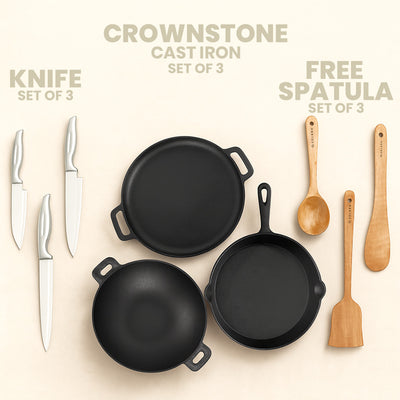
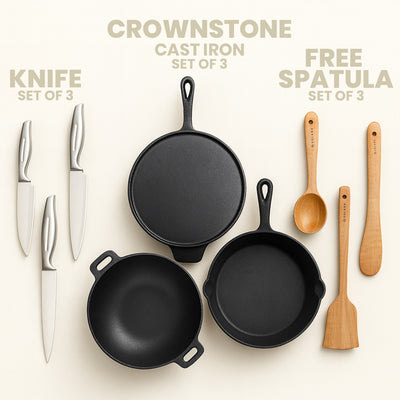
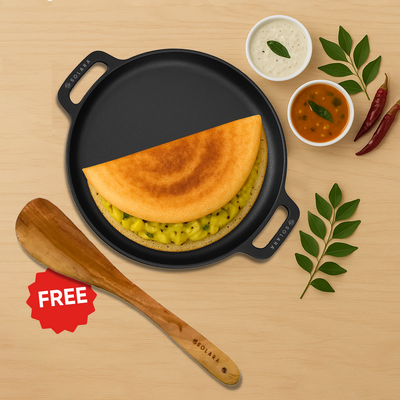
Cared for this way, cast iron outlives every non-stick pan you will ever buy. If you are building your collection, start with the cast iron tawas for rotis and dosas, or browse the full cast iron cookware range — every SOLARA piece ships pre-seasoned and induction-ready.
