











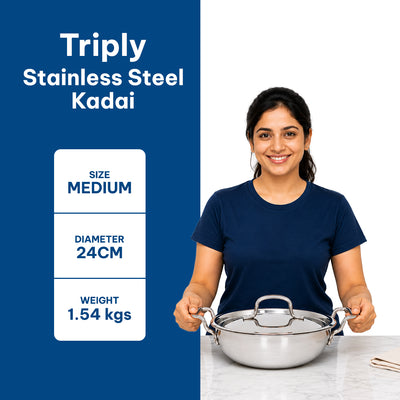

Cast Iron Tawas for Dosas, Rotis & Parathas
Compare cast iron tawa sizes, finishes and prices to find the right tawa for your kitchen. A pre-seasoned cast iron tawa spreads heat evenly for dosas that release cleanly and rotis that brown properly — and it only gets more non-stick with use. Prefer a lighter pan? Triply stainless steel tawas are here too.
Filters
15 products

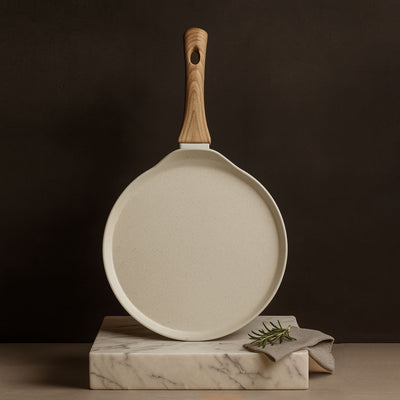

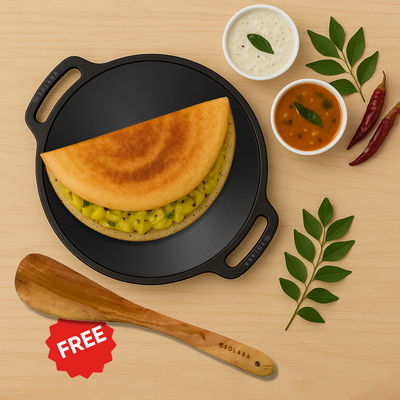
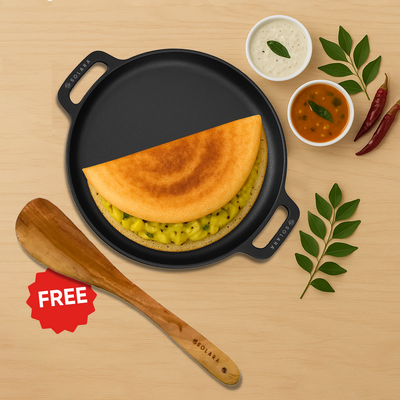
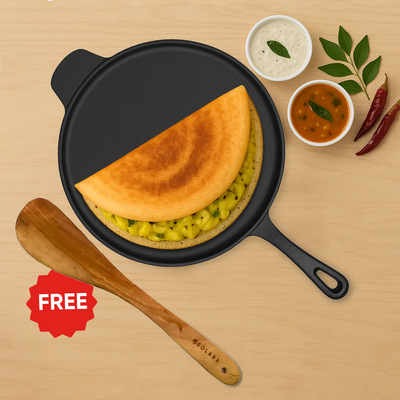


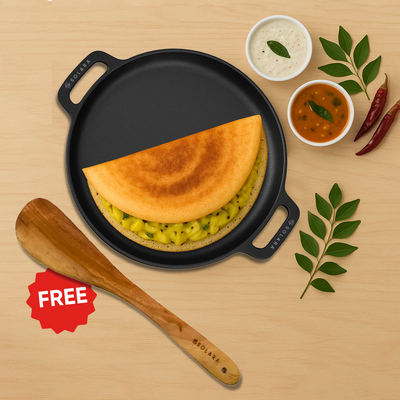


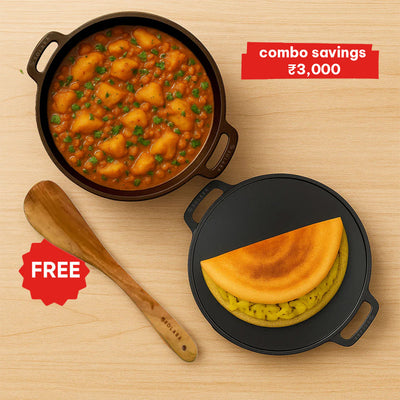
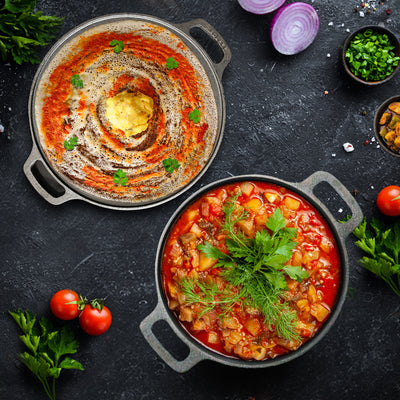
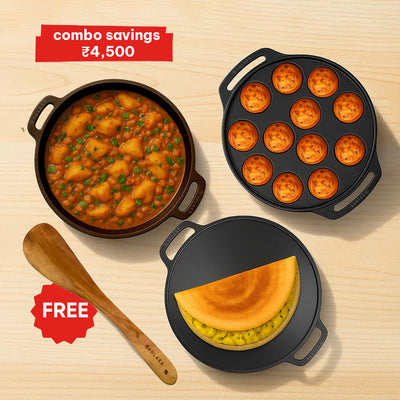
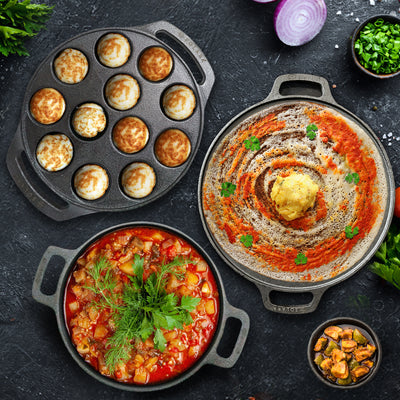
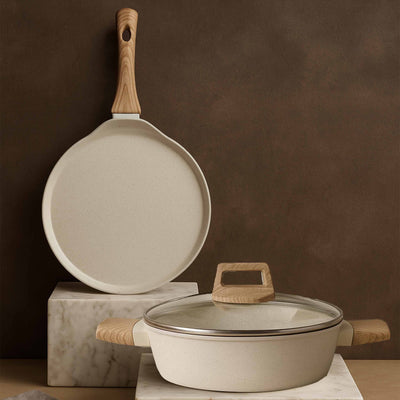
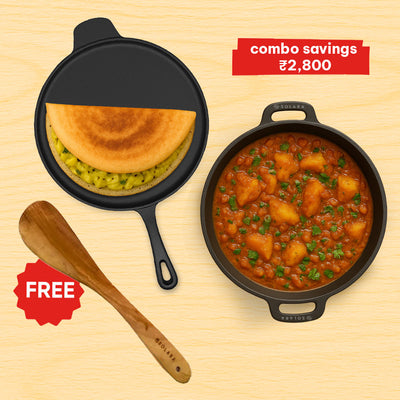
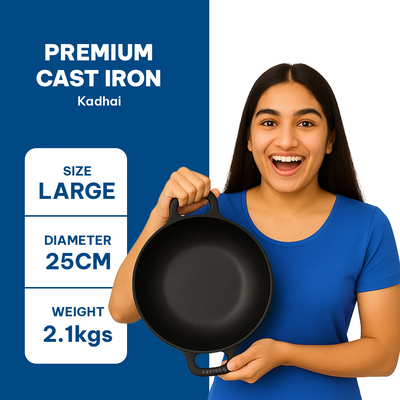
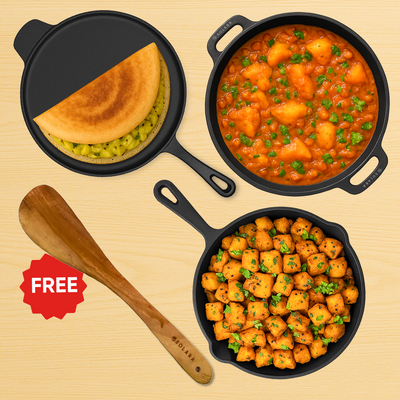
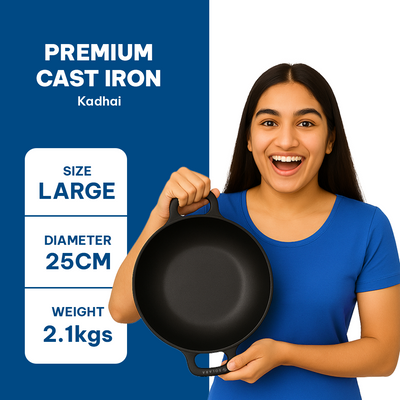
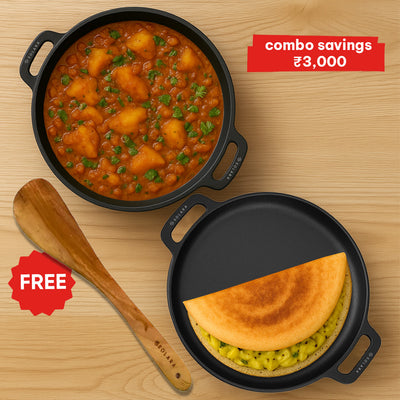
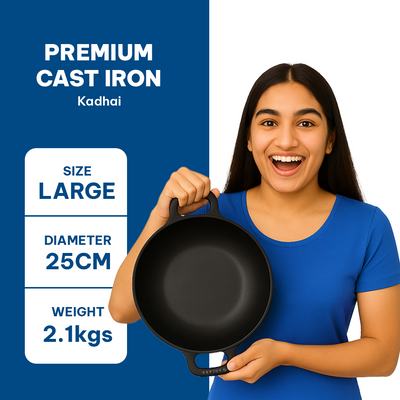


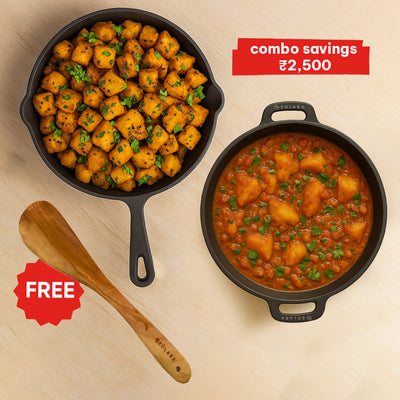
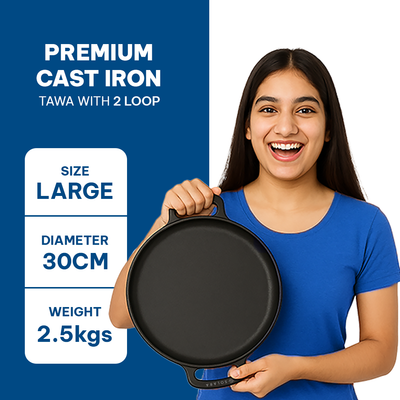
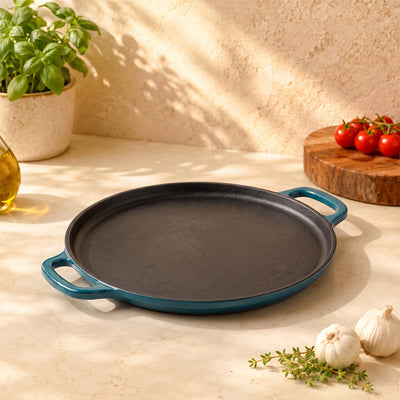
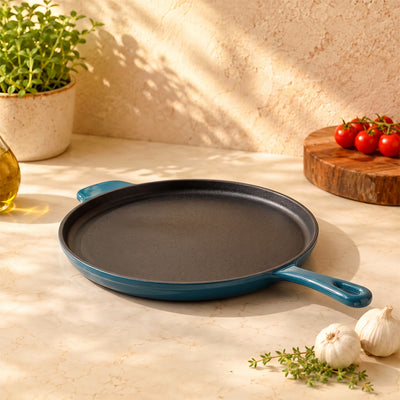
Compare cast iron tawa sizes and finishes
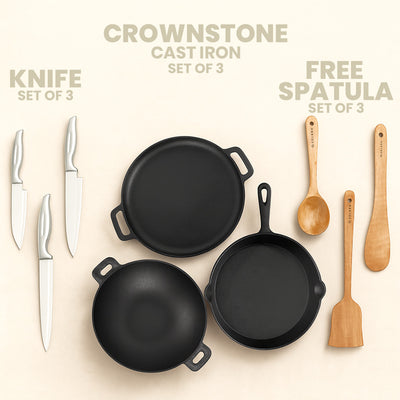
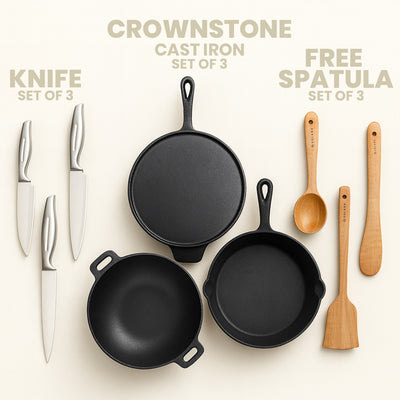
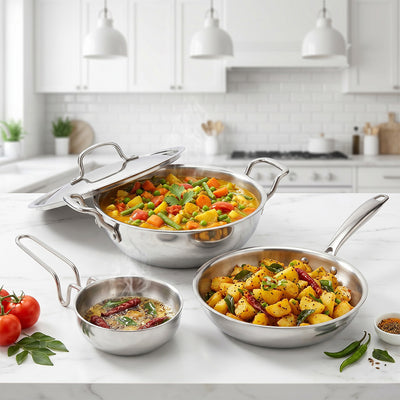
A cast iron tawa holds and spreads heat like no other pan — the reason dosa carts and old kitchens never gave them up. Every SOLARA cast iron tawa comes pre-seasoned, so it is naturally non-stick from the first cook and improves with every one after. Choose the BlackForge or CrownStone finish, a 10 or 12 inch size, and two-loop or long-handle grips. All work on gas and induction. If you want cast iron performance with less weight, the triply stainless steel tawas in this collection are the lighter alternative — no seasoning routine, same even heat.
Cast iron tawas — frequently asked questions
Is a cast iron tawa good for health?
Yes — a cast iron tawa cooks without any synthetic non-stick coating, so there is nothing to chip or leach into food. Cooking on cast iron can also add a small amount of dietary iron to meals, which is why generations of Indian kitchens trusted it.
Which is better — cast iron or iron tawa?
A cast iron tawa is thicker and heavier than a plain (wrought) iron tawa, so it holds heat more steadily — dosas brown evenly instead of burning at the centre. Plain iron heats faster but fluctuates more. For dosas and parathas, cast iron is the more forgiving pan.
What are the disadvantages of a cast iron tawa?
Honest answer: it is heavy, it needs a simple care routine (wipe dry, thin coat of oil), and it can rust if left wet. In return it outlasts every non-stick pan you will ever buy. If weight is the concern, a triply stainless steel tawa is the lighter option.
Which tawa is healthiest?
Tawas without synthetic coatings — cast iron or stainless steel. A pre-seasoned cast iron tawa is naturally non-stick through its seasoning layer; triply stainless steel cooks clean with no coating at all. Both avoid the wear-and-peel problem of coated non-stick tawas.
What size cast iron tawa should I buy?
A 10 inch tawa suits rotis and smaller households. For full-size dosas, choose the 12 inch — dosa batter needs the spreading room. Two-loop handles save space; the long handle gives more control on high flame.
How do I care for a cast iron tawa?
Rinse while warm, wipe fully dry, and rub a thin film of oil before storing — that is the whole routine. Avoid soaking and harsh detergents. Each cook adds to the seasoning, so the tawa gets more non-stick with age.
Does a cast iron tawa work on induction?
Yes — cast iron is naturally induction-compatible, and SOLARA tawas have flat bases that sit properly on induction cooktops as well as gas burners.