






Ceramic cookware is usually bought for one reason: the sense that it is the safer non-stick. That instinct is broadly right, but the marketing around it is vague enough that most buyers do not actually know what they are getting. Here is the straight version — what the coating is, what it is not, and the trade-off nobody puts on the box.
What “ceramic cookware” actually means
Almost every pan sold as ceramic in India is not made of ceramic. It is a metal pan — usually aluminium — with a thin, glass-like coating sprayed and cured onto the cooking surface. The coating is a silica-based (sol-gel) layer, chemically closer to glass or sand than to plastic.
Solid ceramic cookware exists too, but it is heavy, fragile stoneware for oven use, not the light non-stick pan most people mean. When a listing says ceramic non-stick, assume coated metal.
Is ceramic cookware safe?
For normal home cooking, yes. A cured silica coating is inert — it does not react with food, and it does not rely on the fluoropolymer chemistry (PTFE) that made non-stick controversial in the first place. There is no meaningful body of evidence suggesting a properly made ceramic coating is harmful in ordinary use.
Two caveats worth stating plainly rather than glossing over:
- “Ceramic” is not a regulated term. Any manufacturer can print it. It tells you the marketing category, not the exact formulation.
- Quality varies a great deal. The base metal, the number of coats and the curing process all differ between a well-made pan and a cheap one. This is a category where the very cheapest options are a false economy.
If a specific certification matters to you — PFOA-free, PFAS-free, lead and cadmium free — look for the brand to state it explicitly for that product. Treat the absence of a claim as an absence of information rather than assuming either way, and ask the seller.
Ceramic vs PTFE (Teflon): the real difference
| Ceramic coating | PTFE / Teflon | |
|---|---|---|
| Chemistry | Silica-based, glass-like | Fluoropolymer |
| Behaviour at high heat | Does not release fumes; degrades by losing slickness | Can begin breaking down at very high temperatures |
| Initial non-stick | Excellent | Excellent |
| How long the non-stick lasts | Shorter — typically 1–3 years of regular use | Longer, if never overheated or scratched |
| Metal utensils | No | No |
The headline: ceramic sidesteps the chemistry people worry about, and pays for it in longevity.
The honest trade-off: how long ceramic lasts
This is the part most ceramic marketing skips, so here it is directly. A ceramic non-stick surface loses its slickness faster than PTFE does. With regular home use, expect noticeably reduced release after roughly one to three years. It does not flake dramatically; it just gradually stops being non-stick, and eggs start to grip.
That is not a defect and it is not unique to any one brand — it is how silica coatings behave. Heat cycling gradually creates micro-cracks in the layer, and once the surface is no longer continuous the non-stick effect fades.
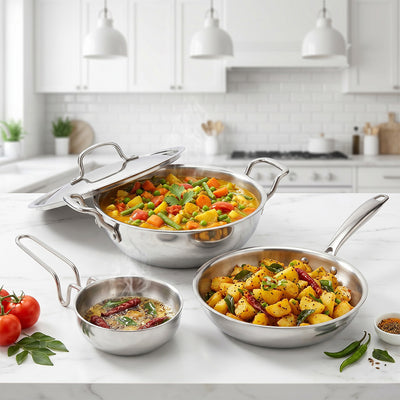
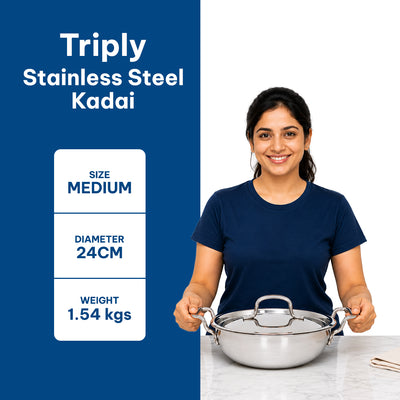
So the sensible way to think about ceramic is: a superb low-oil pan with a service life, not a forever pan. If you want cookware that lasts decades, that is what cast iron and triply stainless steel are for — neither has a coating to lose. Most well-equipped kitchens end up with both kinds for different jobs.
How to make ceramic last much longer
Almost all premature ceramic failure comes from heat. Four habits make a large difference:
- Cook on low to medium heat. Ceramic transfers heat efficiently and does not need a high flame. High heat is the single biggest cause of a coating losing its slickness early.
- Never preheat it empty. Put oil or food in first. An empty pan on a flame spikes in temperature very quickly.
- Let it cool before washing. Cold water on a hot coated pan causes thermal shock and micro-cracking.
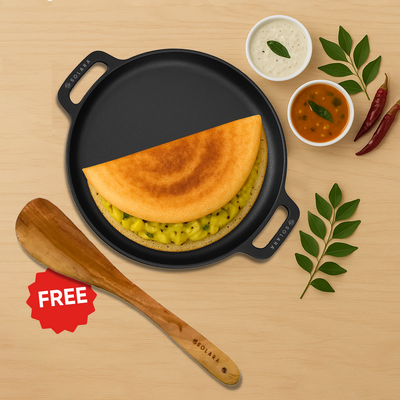
- Use wood, silicone or nylon. No metal utensils and no steel wool. A neem wood spatula set is the cheapest insurance there is.
Also worth knowing: a small amount of oil actually helps a ceramic pan. Cooking bone-dry accelerates wear even though the pan will technically manage it.
SOLARA Belmont ceramic is built for exactly this job — low-oil everyday cooking with rinse-and-wipe cleanup, in Ivory and Carbon finishes.
What to check before buying ceramic
- Base thickness. A thin base warps and creates hot spots that kill the coating early. Heft is a reasonable proxy.
- Induction compatibility, if you have or might get an induction hob.
- Handle fixing. Riveted or securely fixed handles outlast screwed-on ones.
- Honest lifespan messaging. A brand claiming a ceramic coating lasts forever is telling you something about the brand, not the pan.
- What you will actually cook. Ceramic excels at eggs, dosa, fish and low-oil sabzi. For high-heat searing and deep frying, uncoated cookware is the better tool.
Frequently asked questions
Is ceramic cookware good or bad for health?
Good, in the sense that a cured silica coating is inert and does not involve fluoropolymer chemistry. The category's weakness is durability, not safety.
What are the disadvantages of ceramic cookware?
The non-stick surface fades faster than PTFE, it dislikes high heat, it cannot take metal utensils, and quality varies widely between manufacturers. It is also not the right pan for hard searing.
How long does ceramic cookware last?
Expect one to three years of good non-stick performance with regular use — longer if you keep the heat moderate, never preheat it empty and avoid thermal shock. The pan itself lasts far longer than its coating.
Is ceramic better than non-stick?
It depends what you mean by better. Ceramic avoids fluoropolymer chemistry; PTFE holds its non-stick longer. If chemistry is your concern, ceramic wins. If you want the longest-lasting release, PTFE does — and if you want neither coating, go uncoated.
Can ceramic cookware go in the dishwasher?
Many are rated for it, but hand washing is gentler and meaningfully extends the coating's life. Dishwasher detergents are abrasive and alkaline.
Why has my ceramic pan stopped being non-stick?
Almost always heat damage or oil residue. First try a gentle scrub with baking soda to lift polymerised oil film — that restores a surprising number of pans. If food still grips after cleaning, the coating has worn and cannot be restored.
