






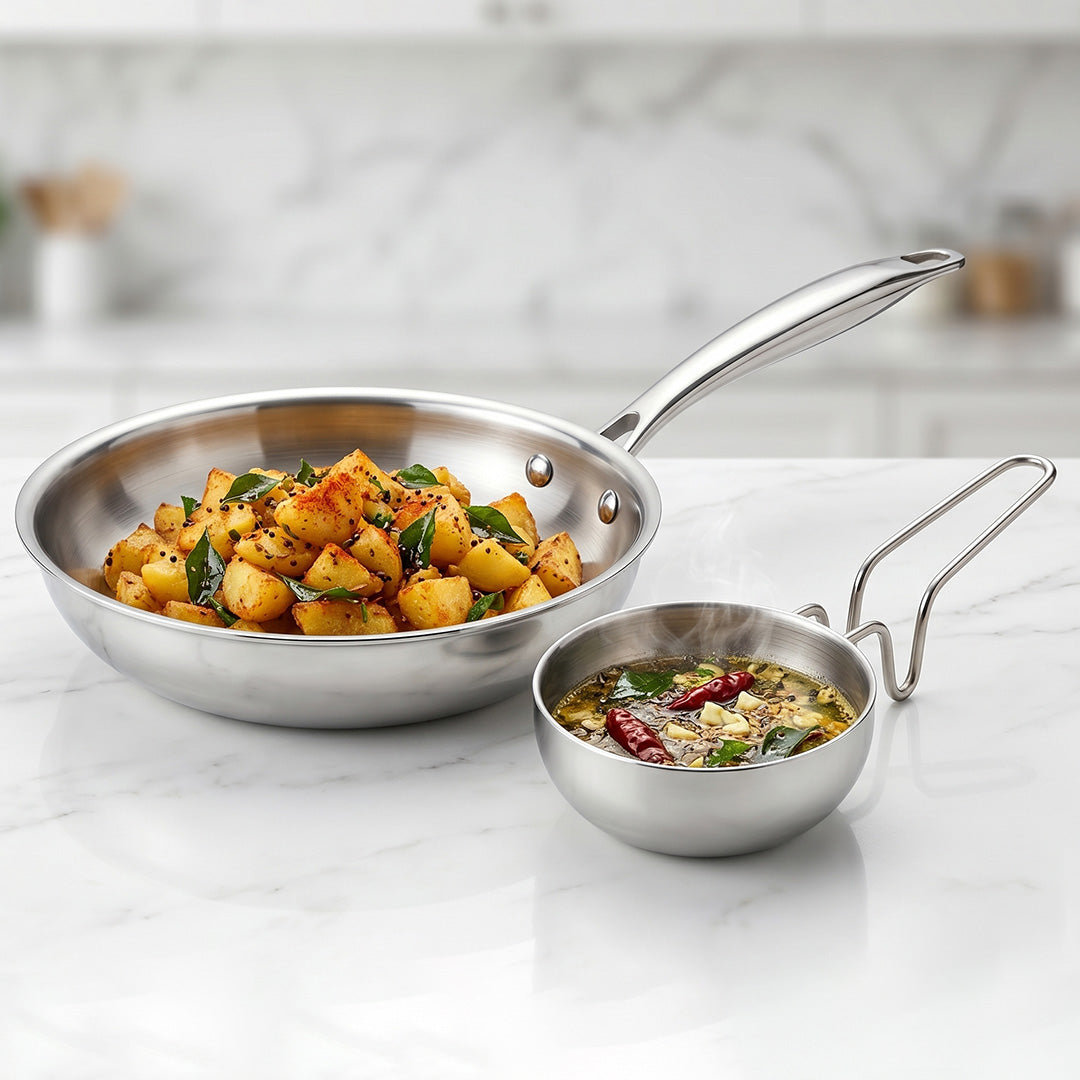
Triply Fry Pan + Tadka Pan
★★★★★ 0.00 · 0 reviews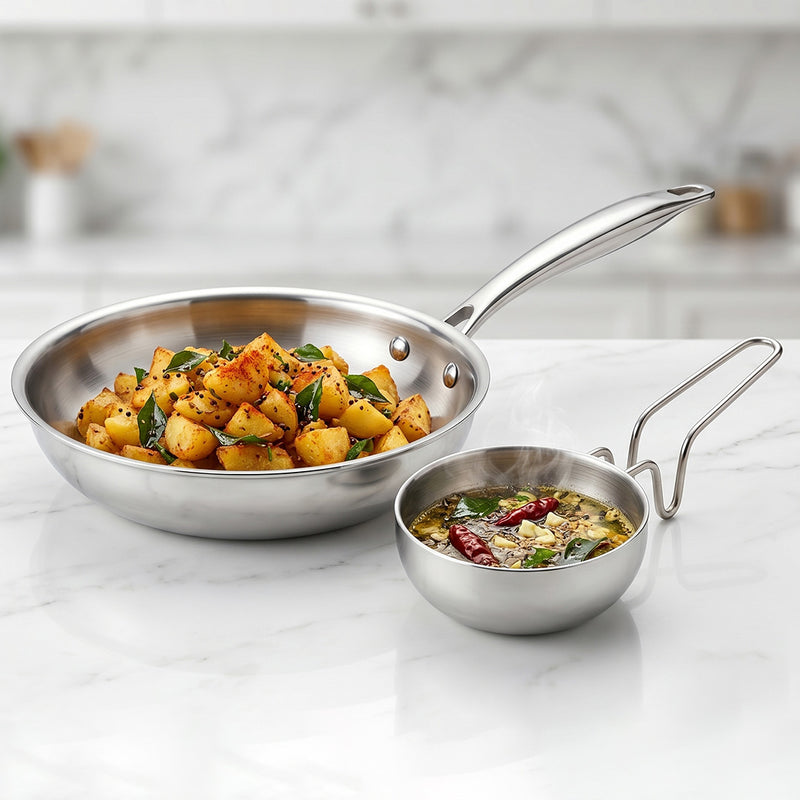
Triply Fry Pan + Tadka Pan
Free Shipping; No Cost EMI Available at Checkout
Free Shipping
Build Your Own Cookware Combo & Save up to 12%
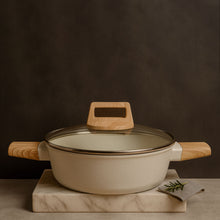
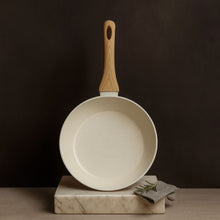
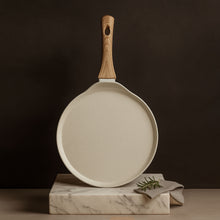
Add this to any other cookware — cast iron, triply or ceramic. The more pieces you add, the bigger the discount.
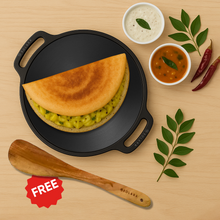
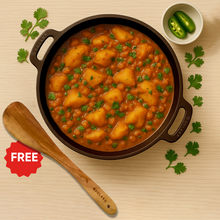
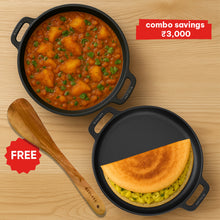
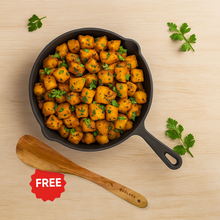
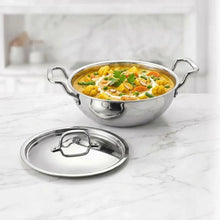
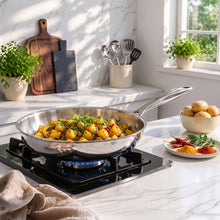
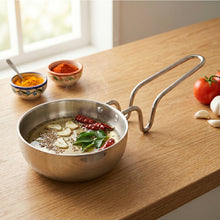
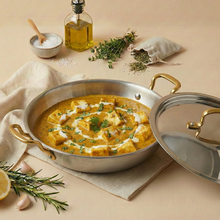
⚡ Most shoppers pick 3 pieces and save 10%
Discount applies automatically at checkout · no code needed · add-ons don’t count toward the tier


Why TriPly Stainless Beats Ordinary Cookware
Ordinary cookware
TriPly by SOLARA 🏆
Buyer's guide
Triply Stainless Steel Fry Pan — What to Know
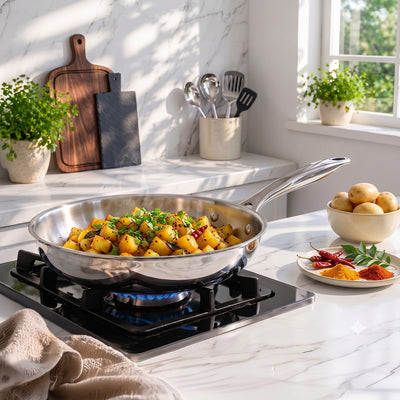
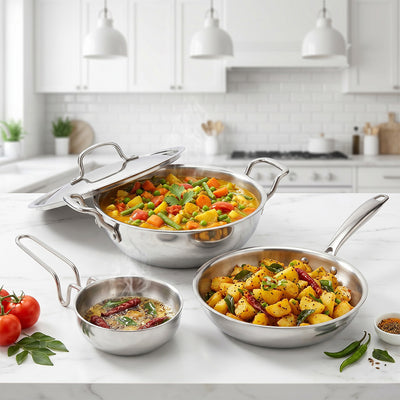
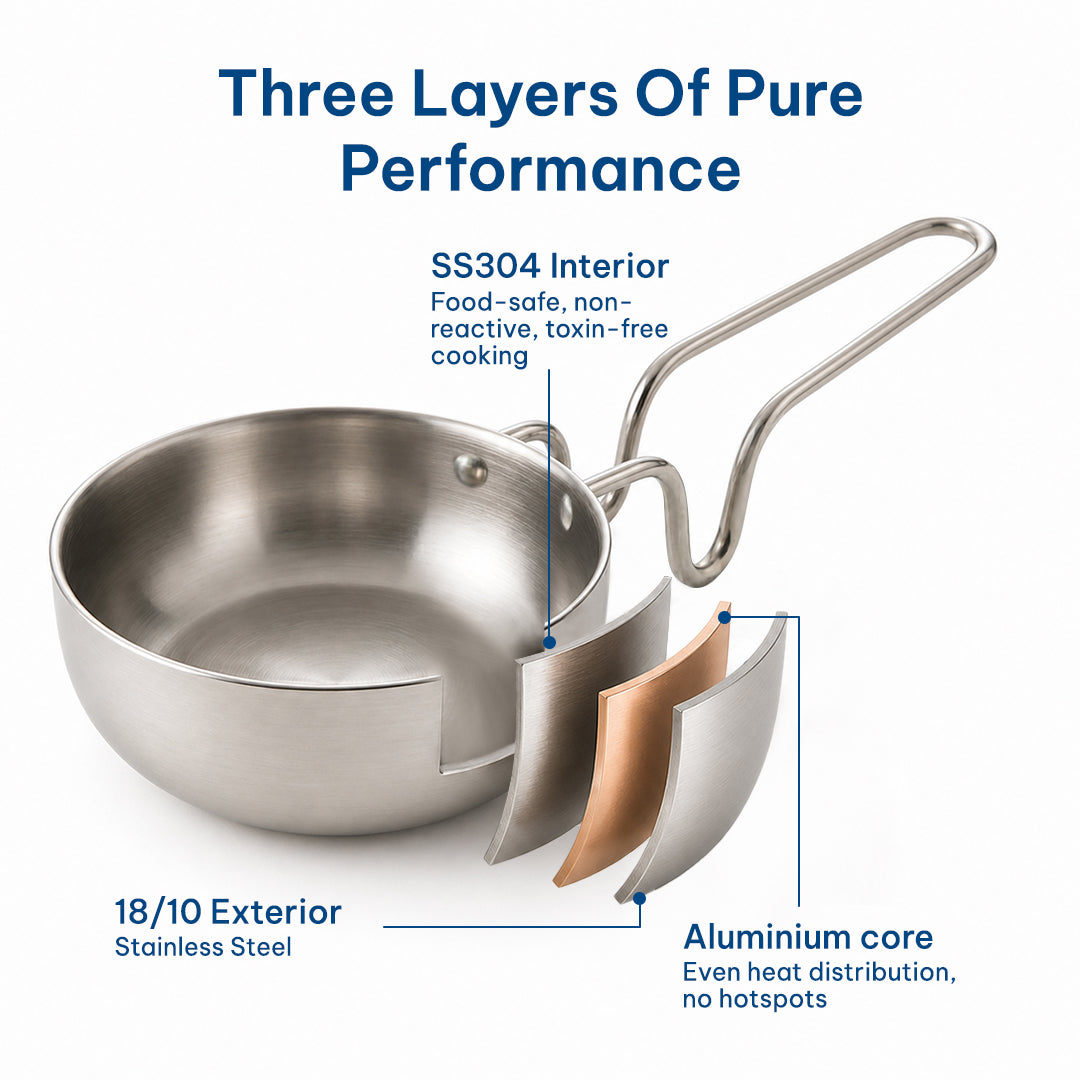
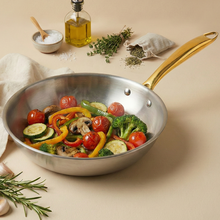
A triply stainless steel fry pan has an SS 304 cooking surface bonded over an aluminium heat core, with a magnetic steel outer. No coating, nothing to wear out, and a surface that is completely inert — so it handles searing, acidic sauces and metal utensils without a second thought.
What a steel fry pan does better than a coated one
- Browning and searing. Coated pans cannot take the heat; steel is built for it.
- Fond. Those browned bits that stick are concentrated flavour — deglaze with water or tomato and scrape them back into the dish. Non-stick pans give you nothing to deglaze.
- Longevity. There is no coating with a service life. It cooks the same in year ten.
The sticking question, answered
Steel sticks when it goes in cold. The order matters: heat the dry pan on medium, confirm with the water drop test, add oil, then add food — and then leave it alone. Food releases on its own once a crust forms; if it grips, it is not ready. The complete method, including eggs and paneer, is in how to cook on stainless steel without sticking.
Triply helps here more than people expect: because the aluminium core runs through the whole body, there is no searing ring above the burner catching your food while the edges stay cool.
Care
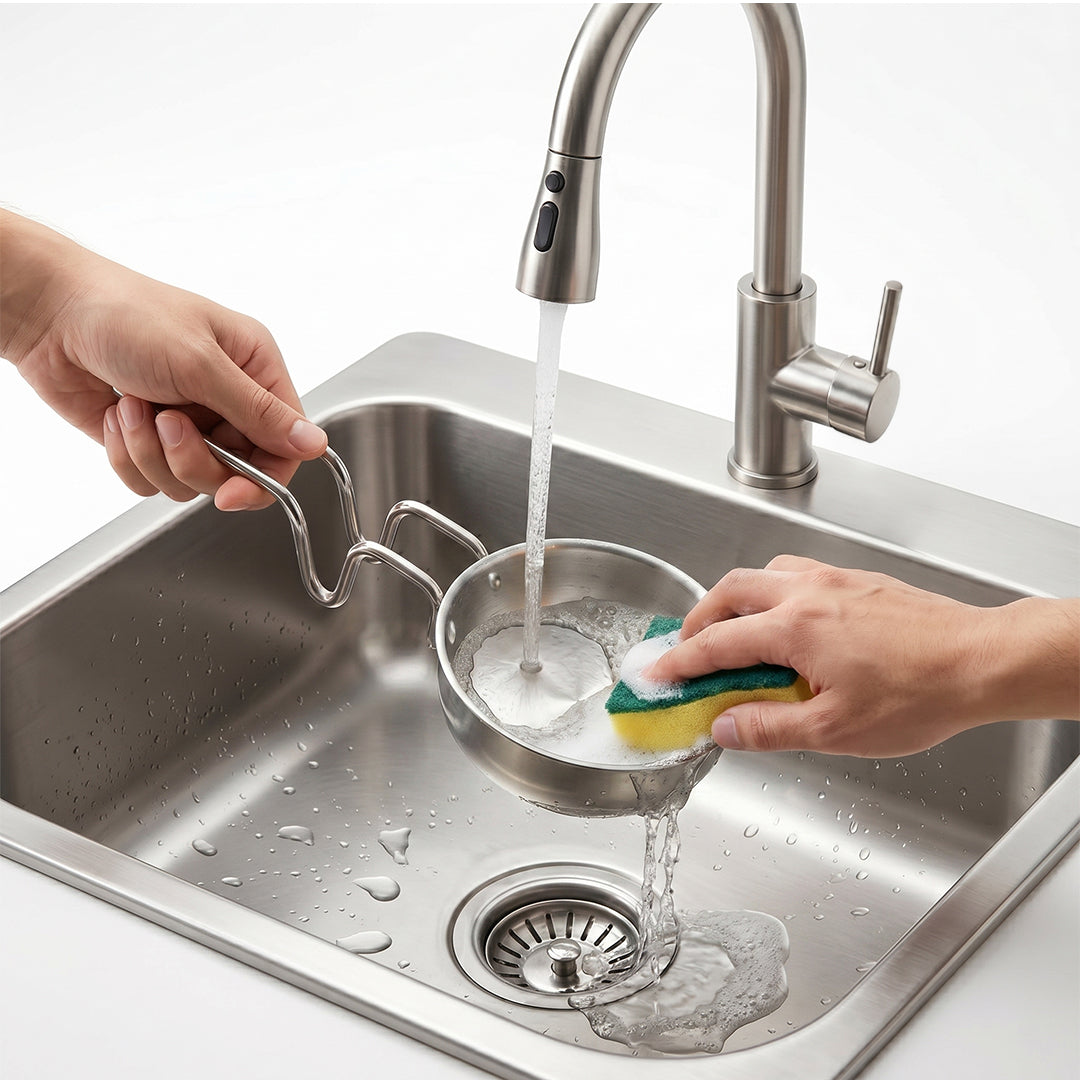
- Metal utensils, abrasives and the dishwasher are all fine.
- White marks are hard-water minerals — lemon or vinegar removes them.
- Rainbow tint is cosmetic oxidation, not damage.
Common questions
Do I need to season it? No. Unlike cast iron, steel does not build a permanent seasoning layer and does not need one.
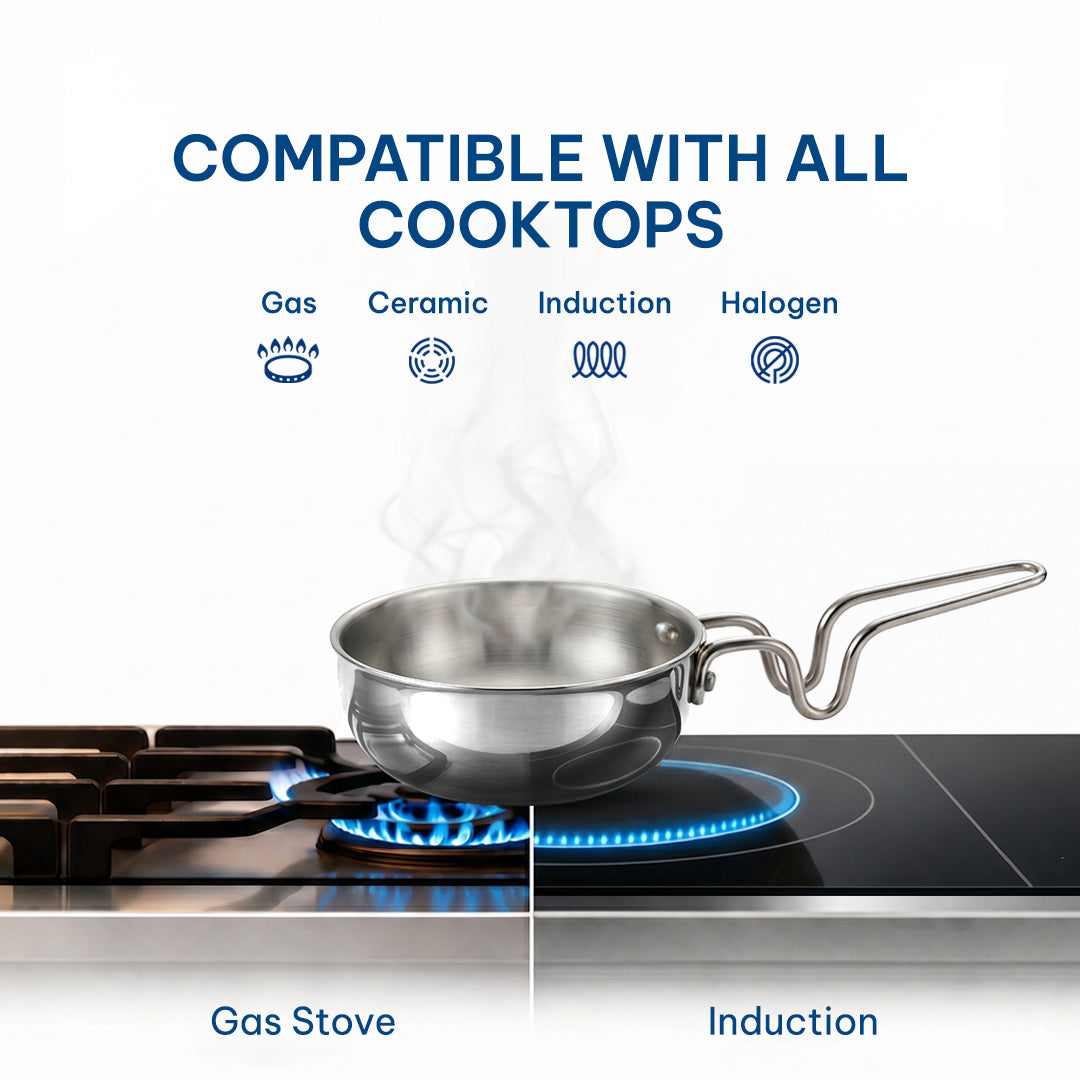
Does it work on induction? Yes — induction, gas, electric, ceramic and halogen.
Steel or ceramic for eggs? Ceramic is easier; steel is doable with enough fat and lower heat, and lasts far longer. See the material comparison.