








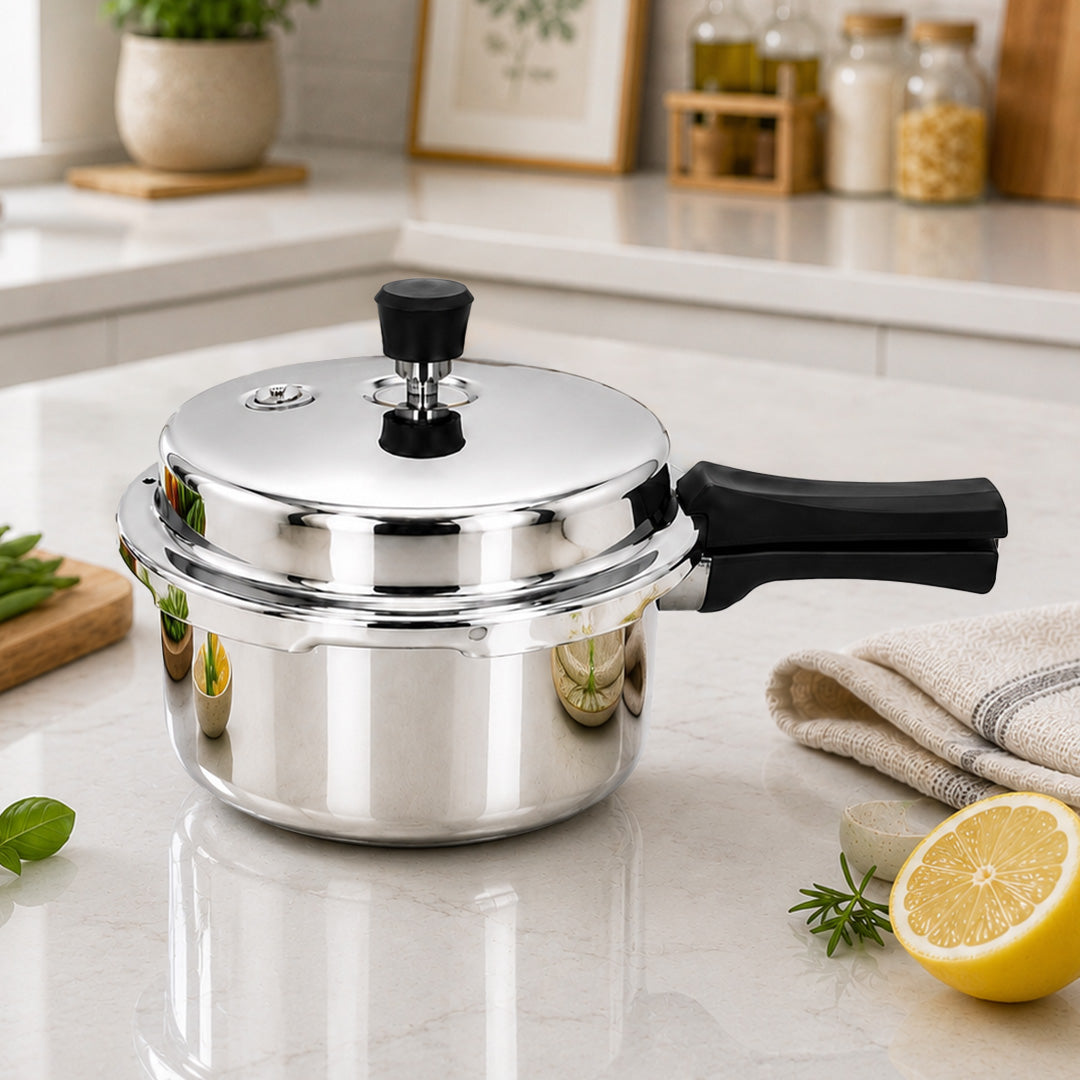
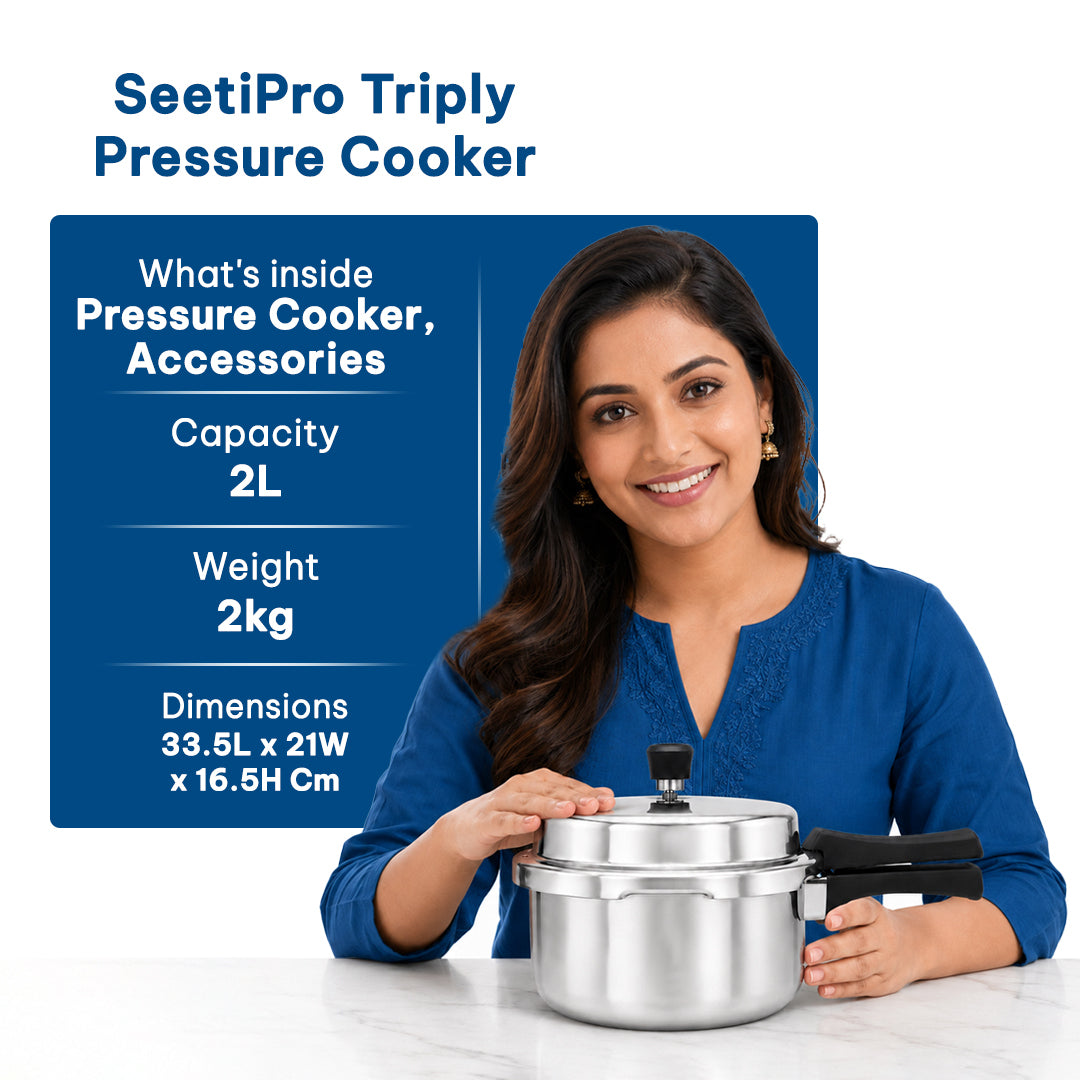
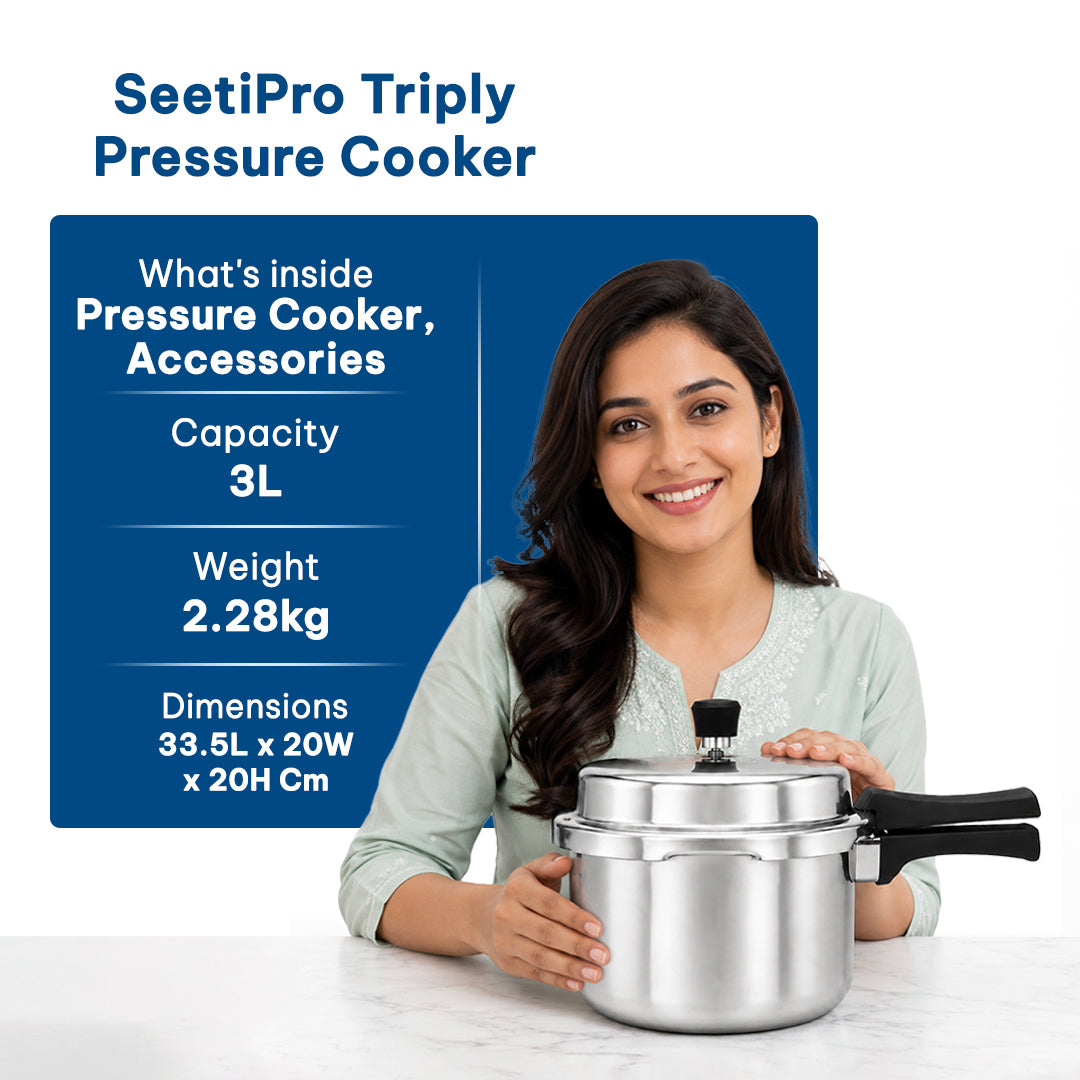
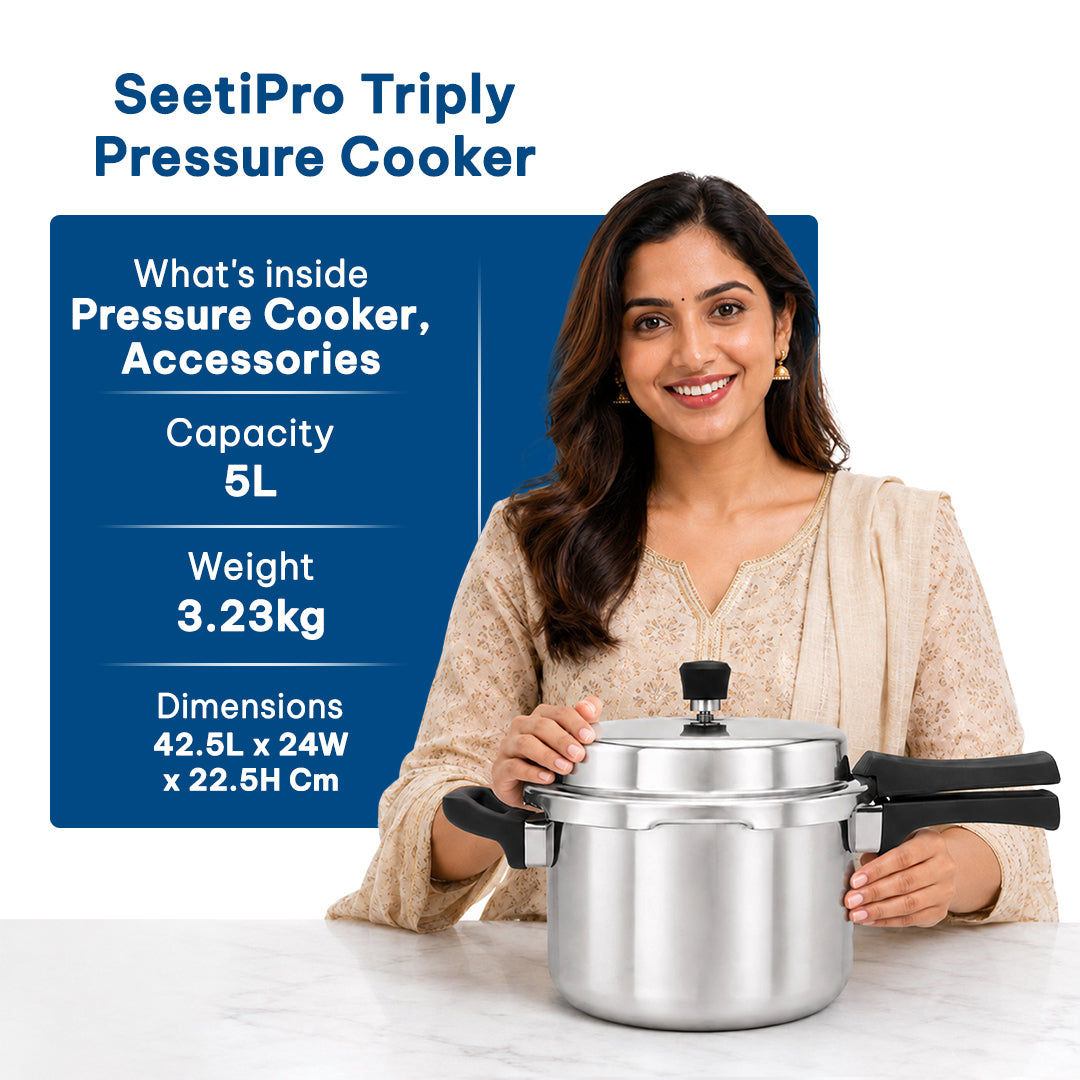
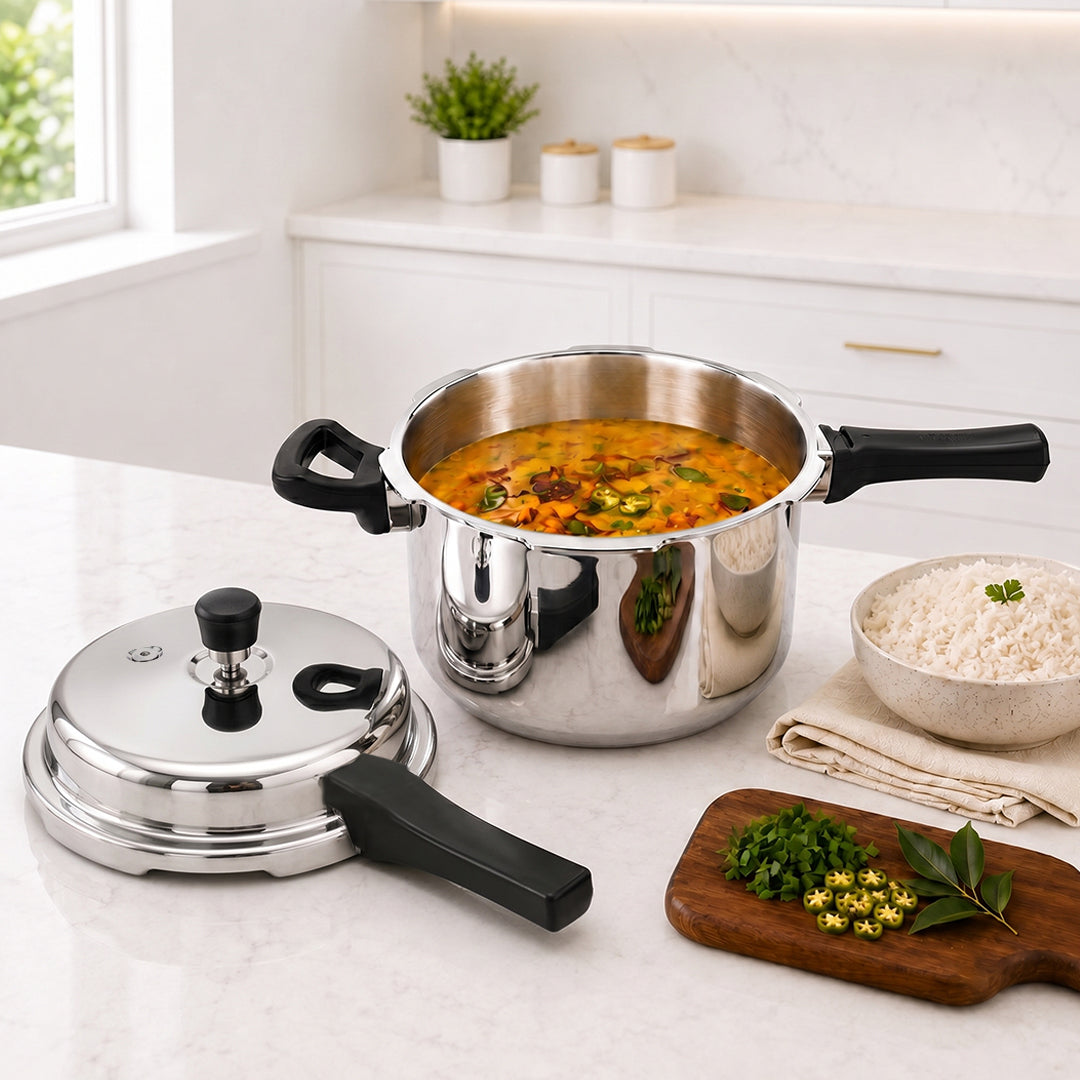
SeetiPro Triply Pressure Cooker

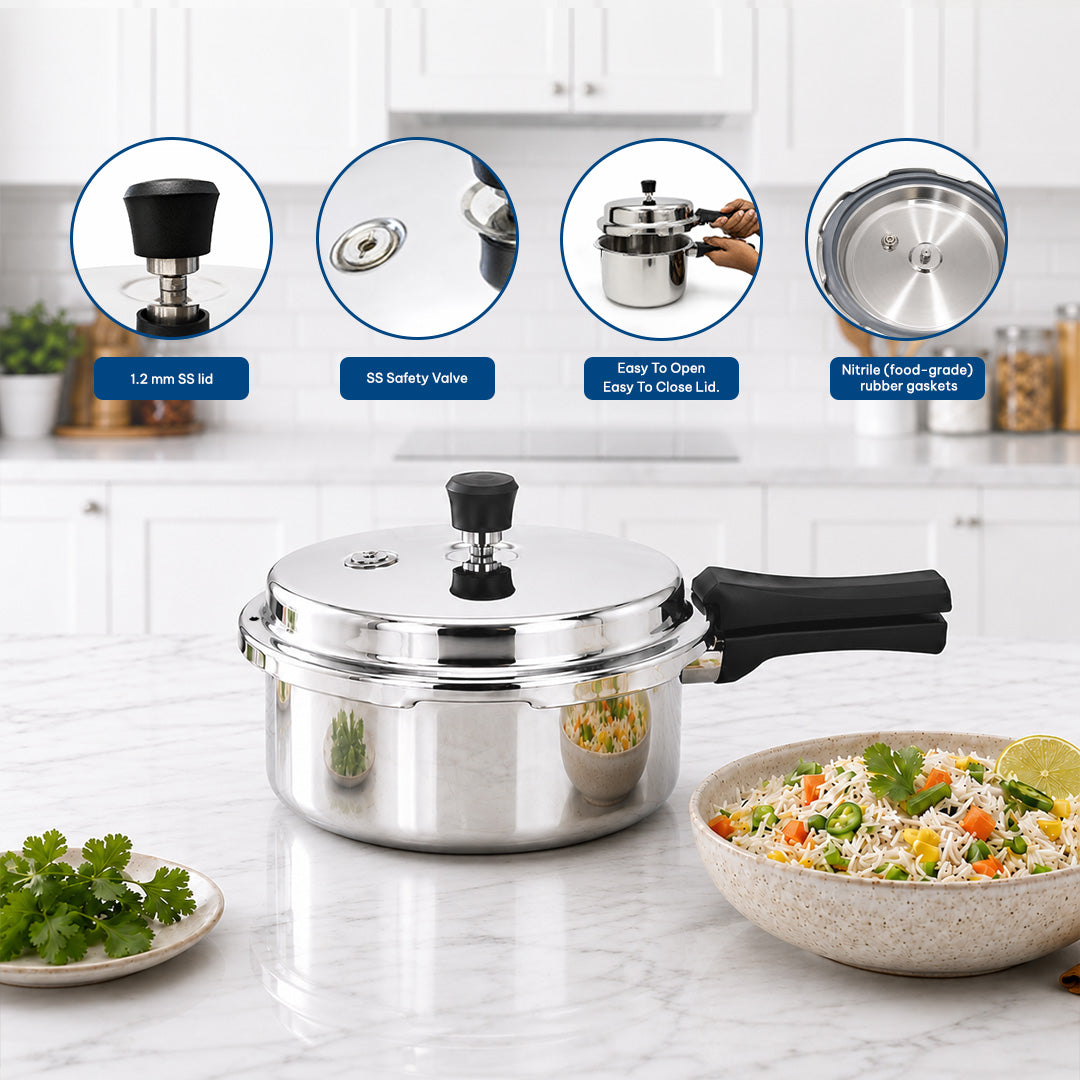
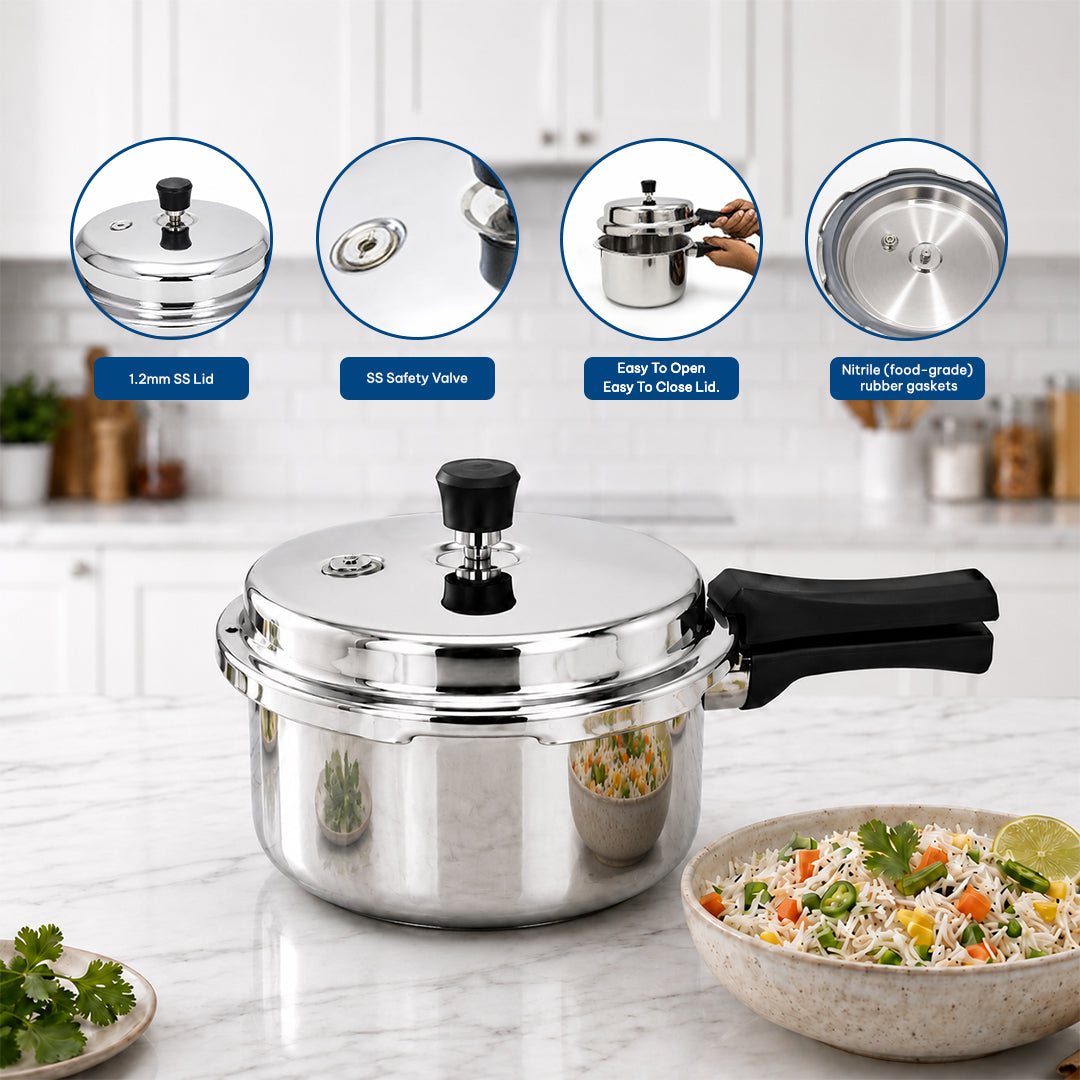
SS Safety Valve

Nitrate Rubber Gaskets

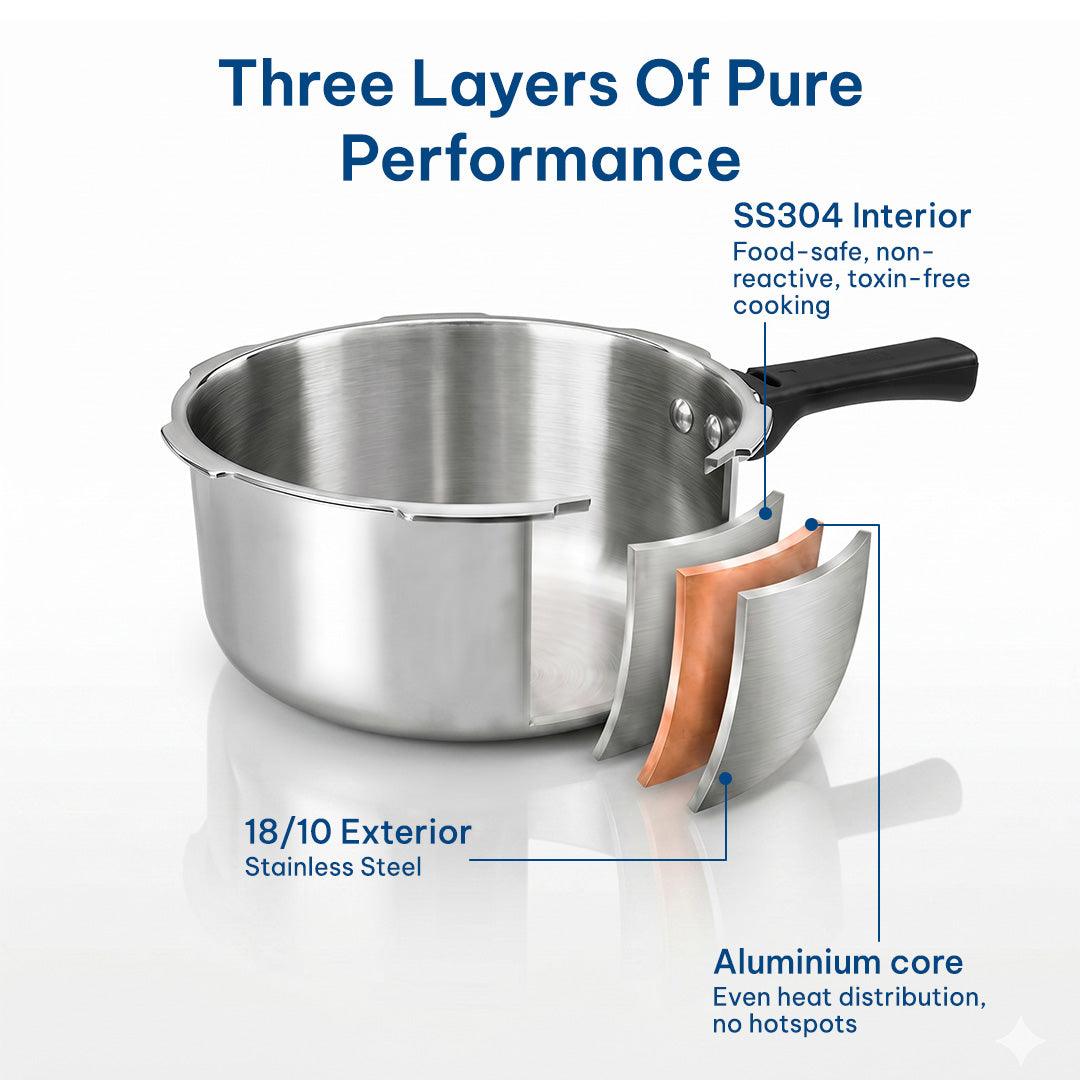
Inner Surface ss 304 food grade

Soft Touch handles
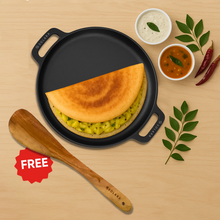
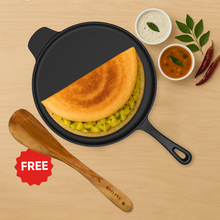
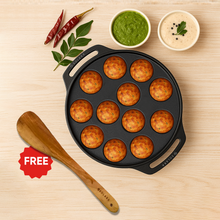
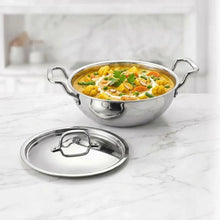
Build Your Own Cookware Combo & Save up to 12%
Add this to any other cookware — cast iron, triply or ceramic. The more pieces you add, the bigger the discount.
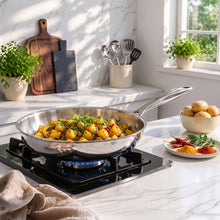
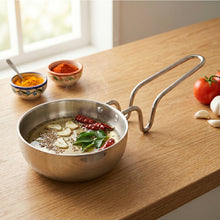
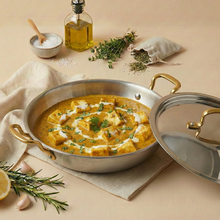
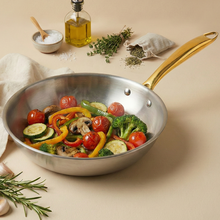
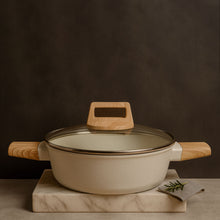
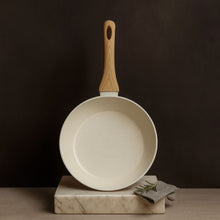
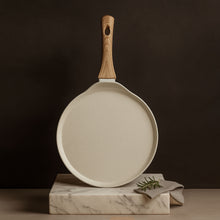
⚡ Most shoppers pick 3 pieces and save 10%
Discount applies automatically at checkout · no code needed · add-ons don’t count toward the tier
Will food stick? Not if you do this.
Stainless gives you a sear non-stick can't — you just need one simple trick before you cook.
-
1
Preheat the pan
Heat the empty pan on medium for about 2 minutes — patience here is everything.
-
2
Do the water test
Flick a few drops of water in. When they bead up and glide like mercury, the pan is ready.
-
3
Add oil, then cook
Swirl in oil, then add your food. It releases cleanly — no sticking, perfect browning.
Master this once and you'll never miss non-stick.
Stainless vs non-stick: do the math
Non-stick gets tossed every couple of years. This pan lasts decades.
+ zero coating flaking into your food
Illustrative estimate based on your inputs.

Crafted for Everyday Excellence
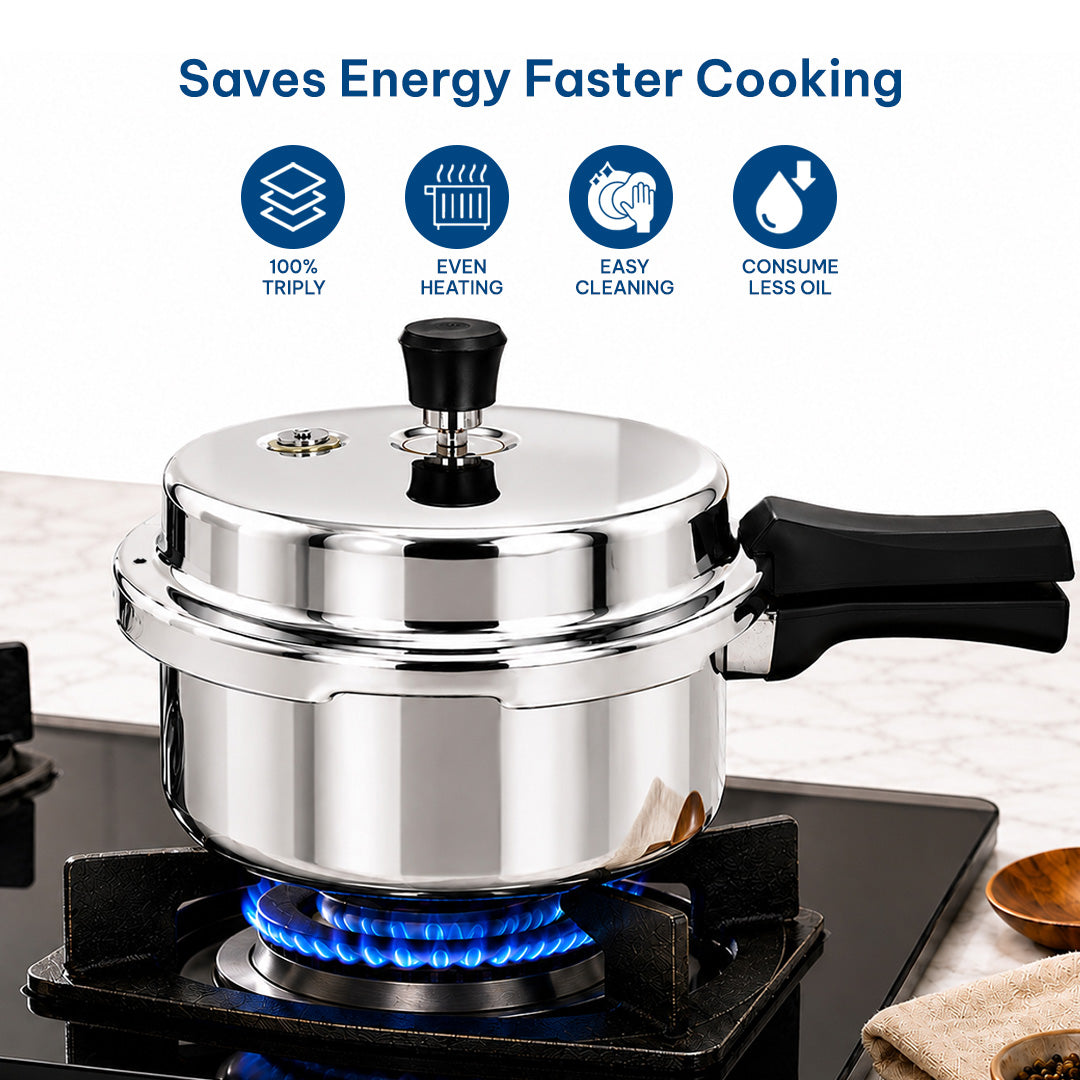
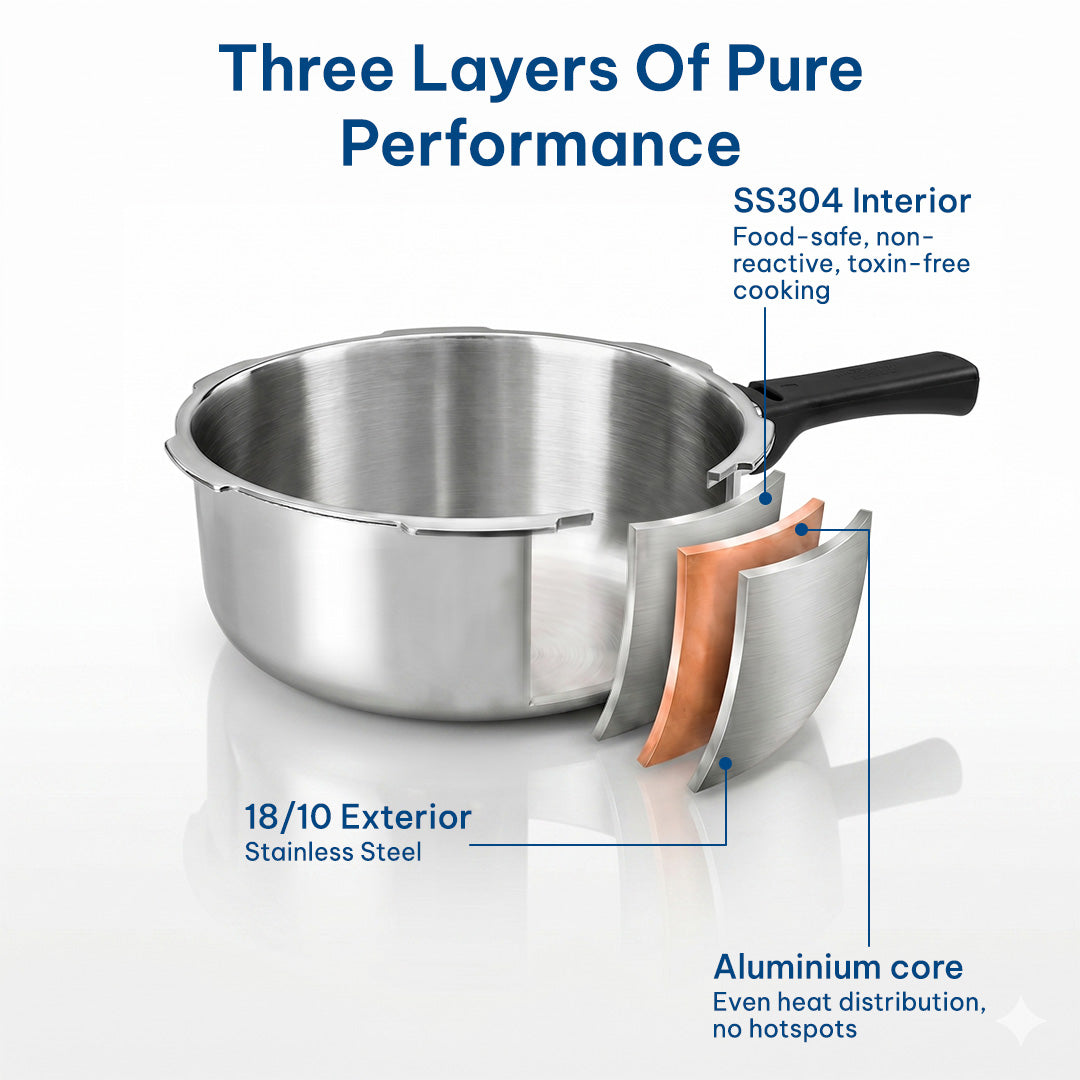
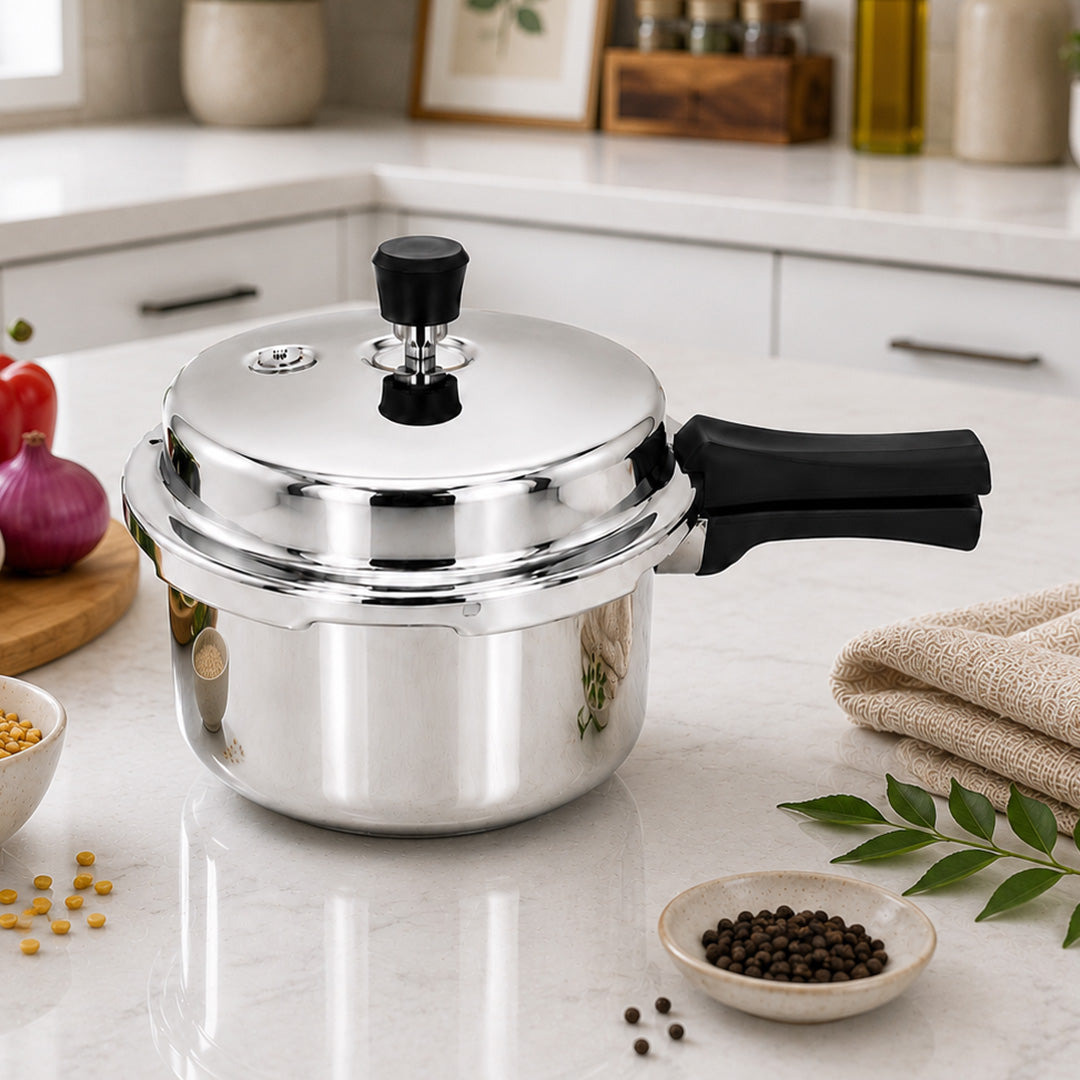
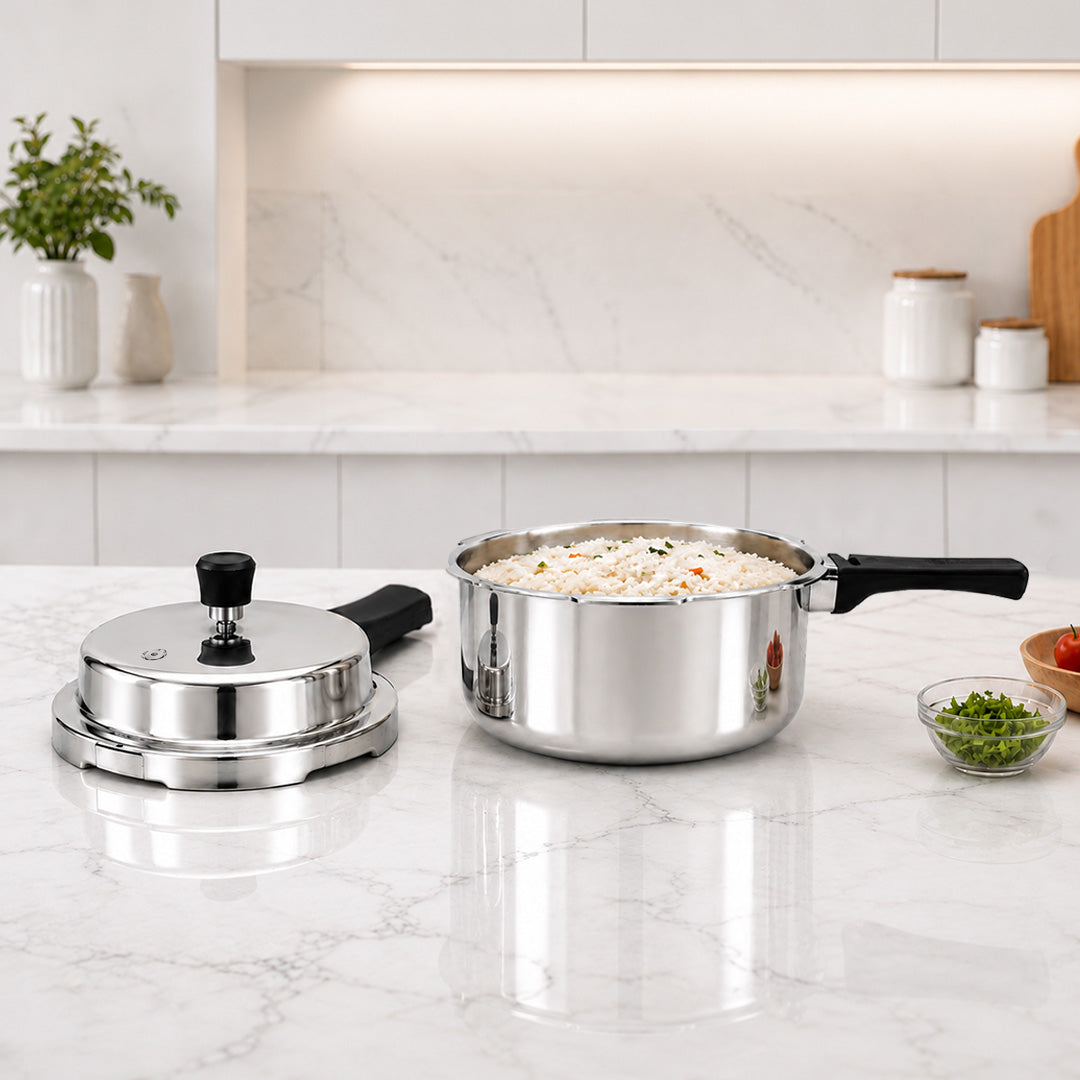
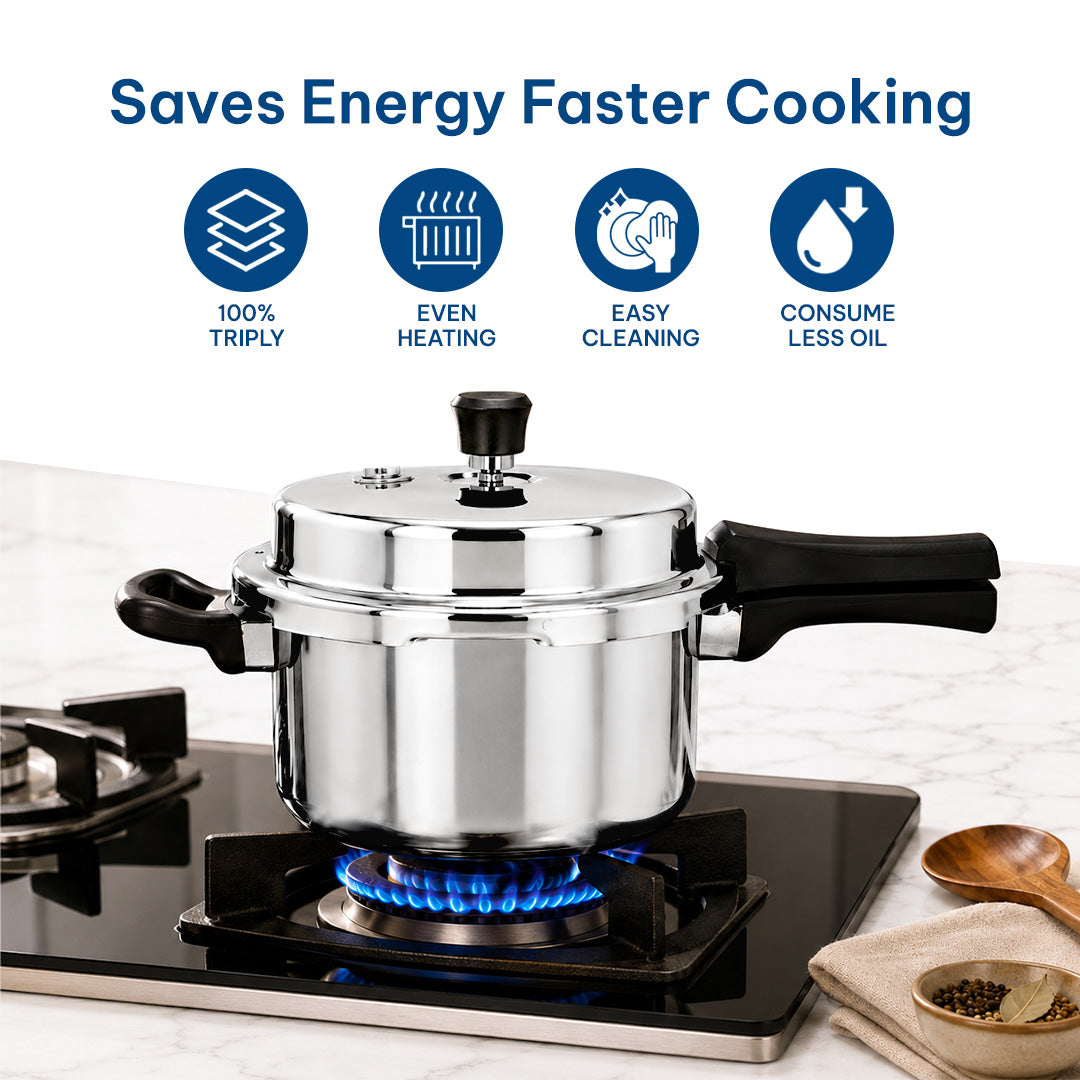
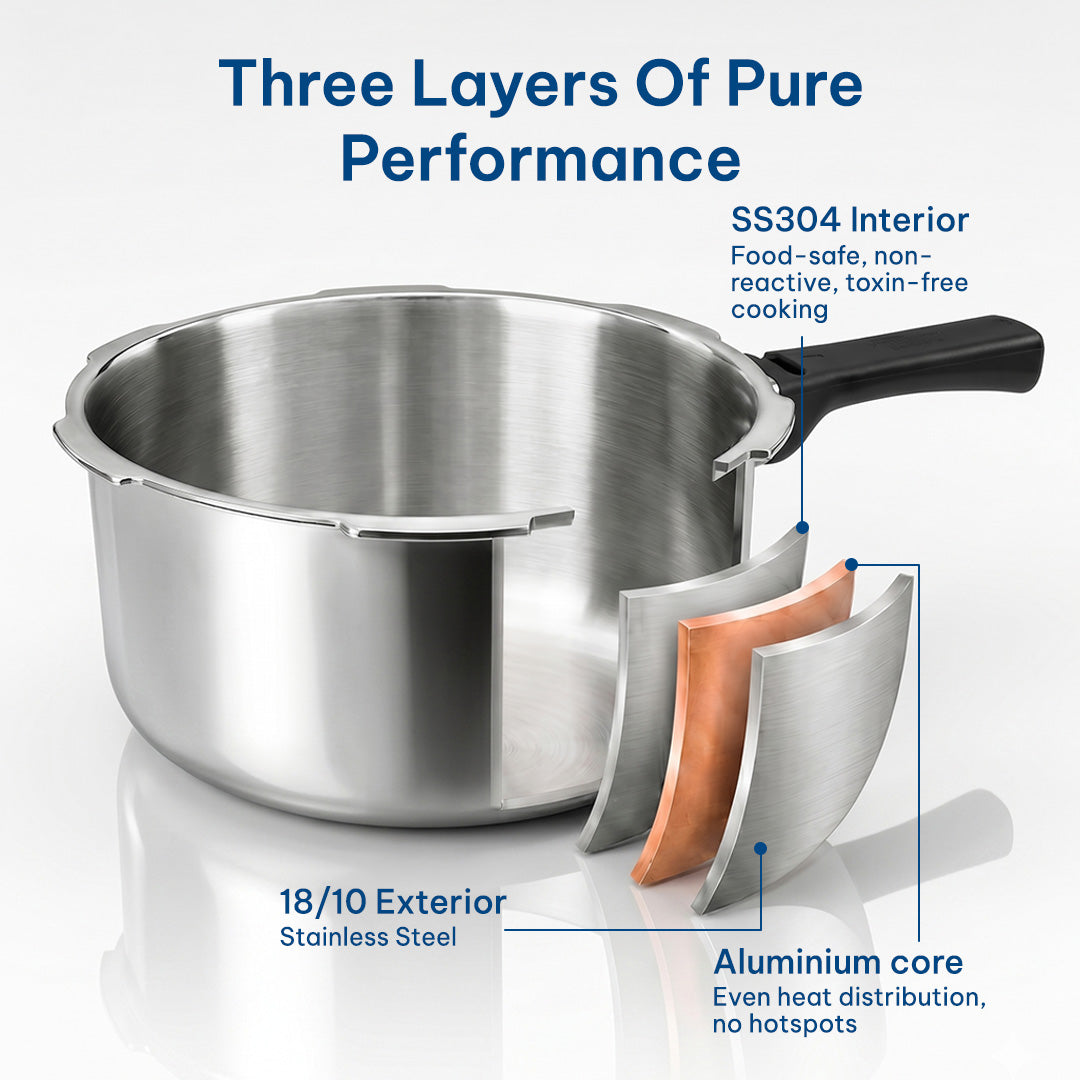
Designed with advanced 3-layer construction, this pressure cooker combines a stainless steel interior, an aluminum core, and a durable stainless steel exterior to deliver even heating, long-lasting performance, and consistently delicious results.

Confidence in Every Meal
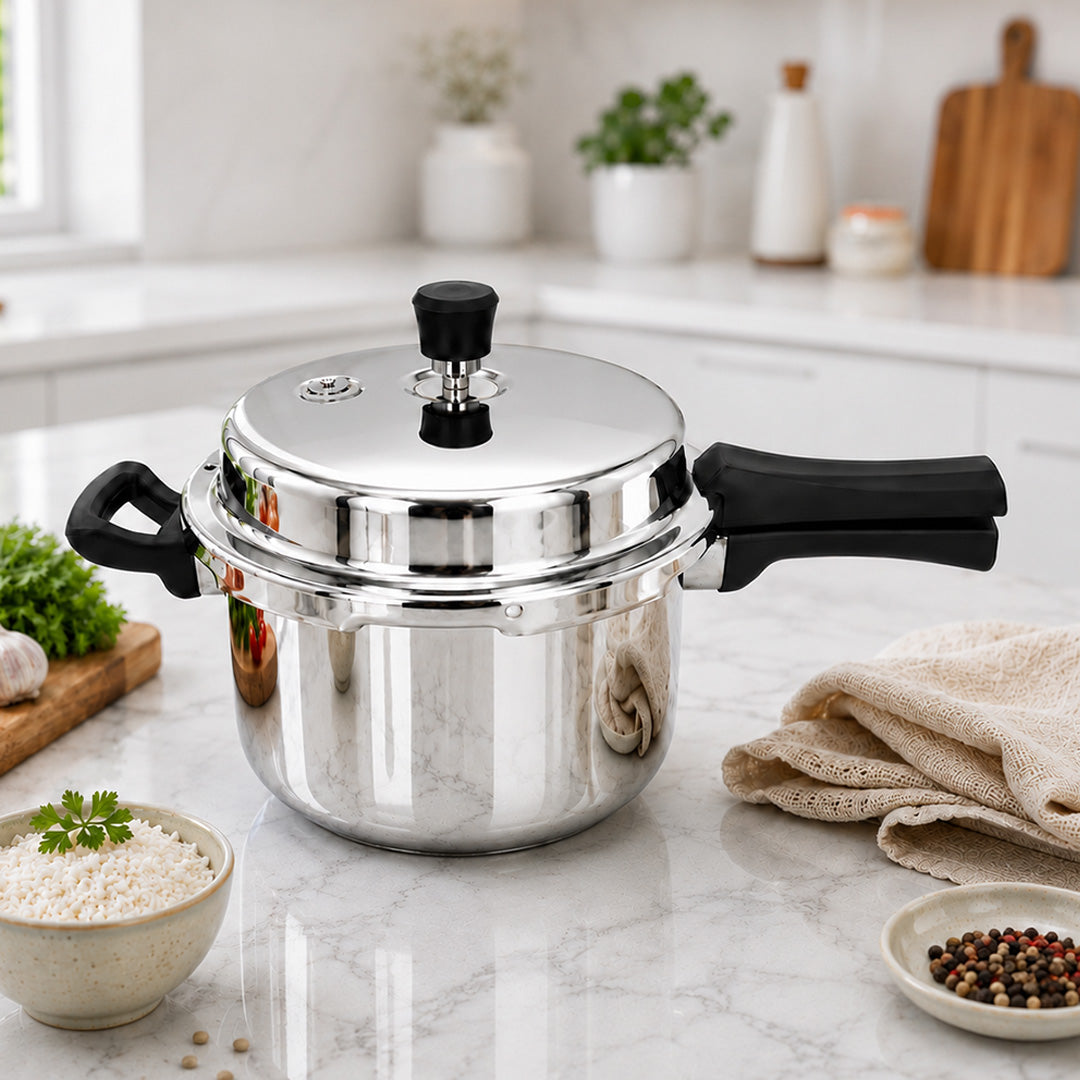
The secure outer lid locking system, safety valve, and durable gasket work together to provide a safe cooking experience while locking in steam, natural flavours, and essential nutrients for healthier meals.

Save Time Without Compromise
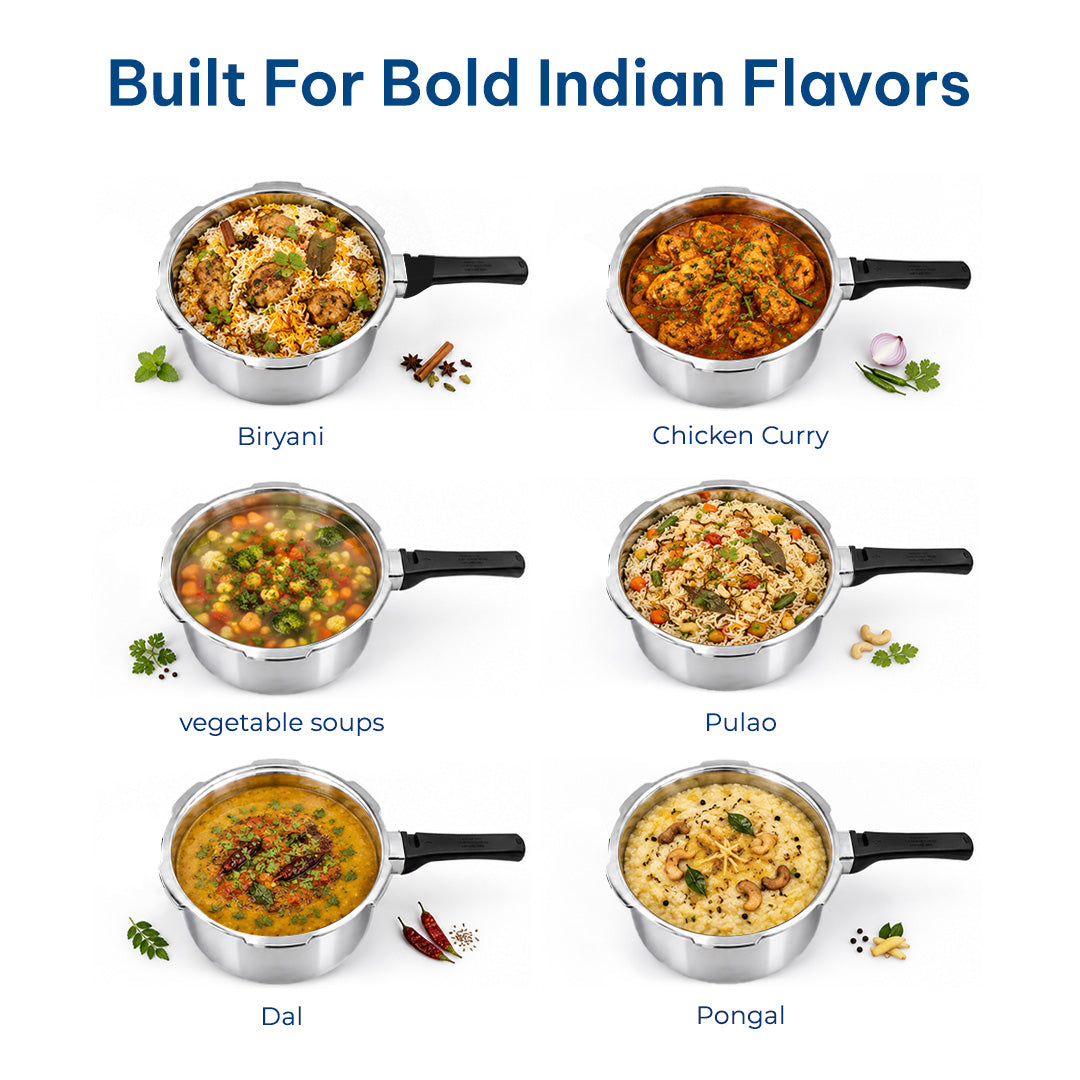
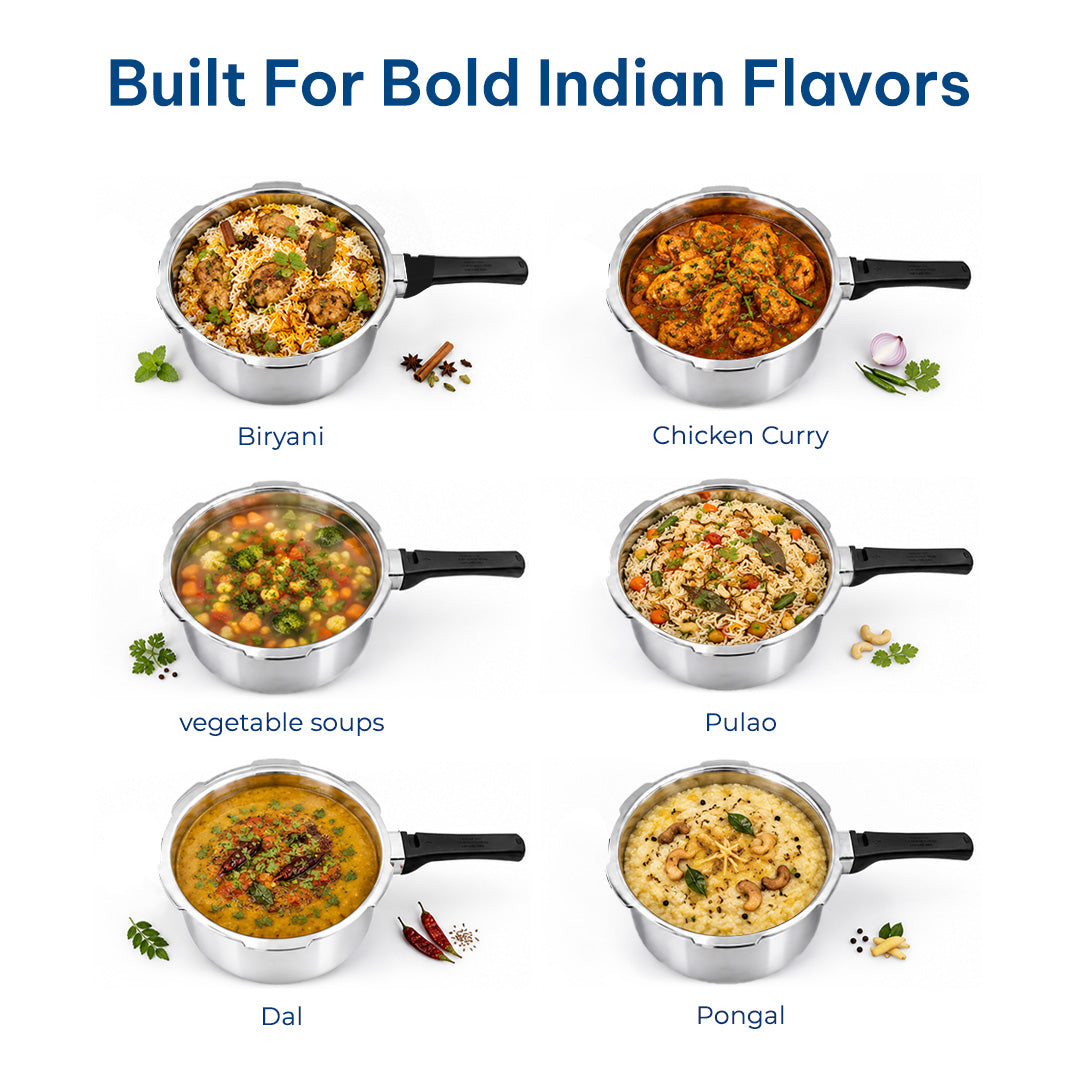
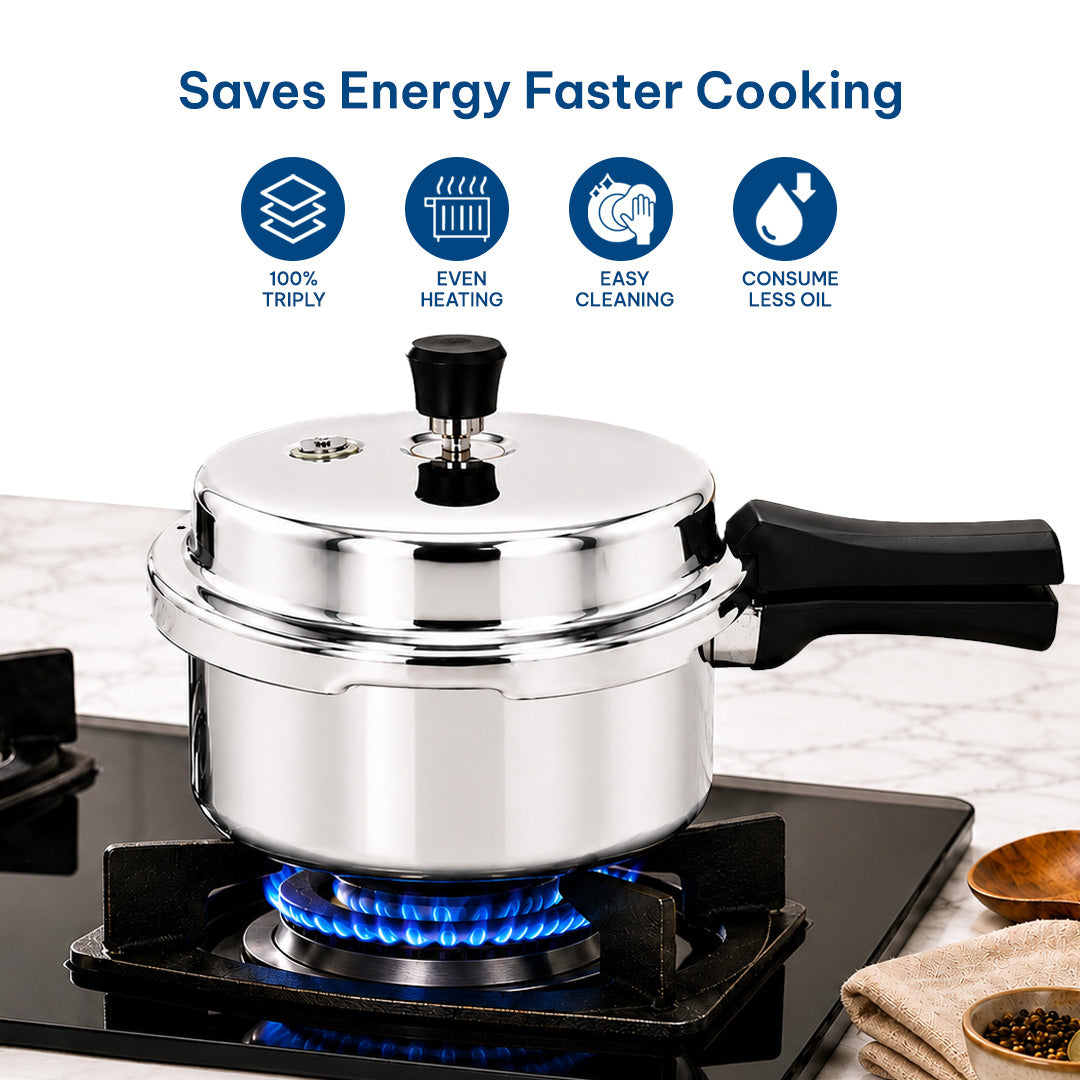
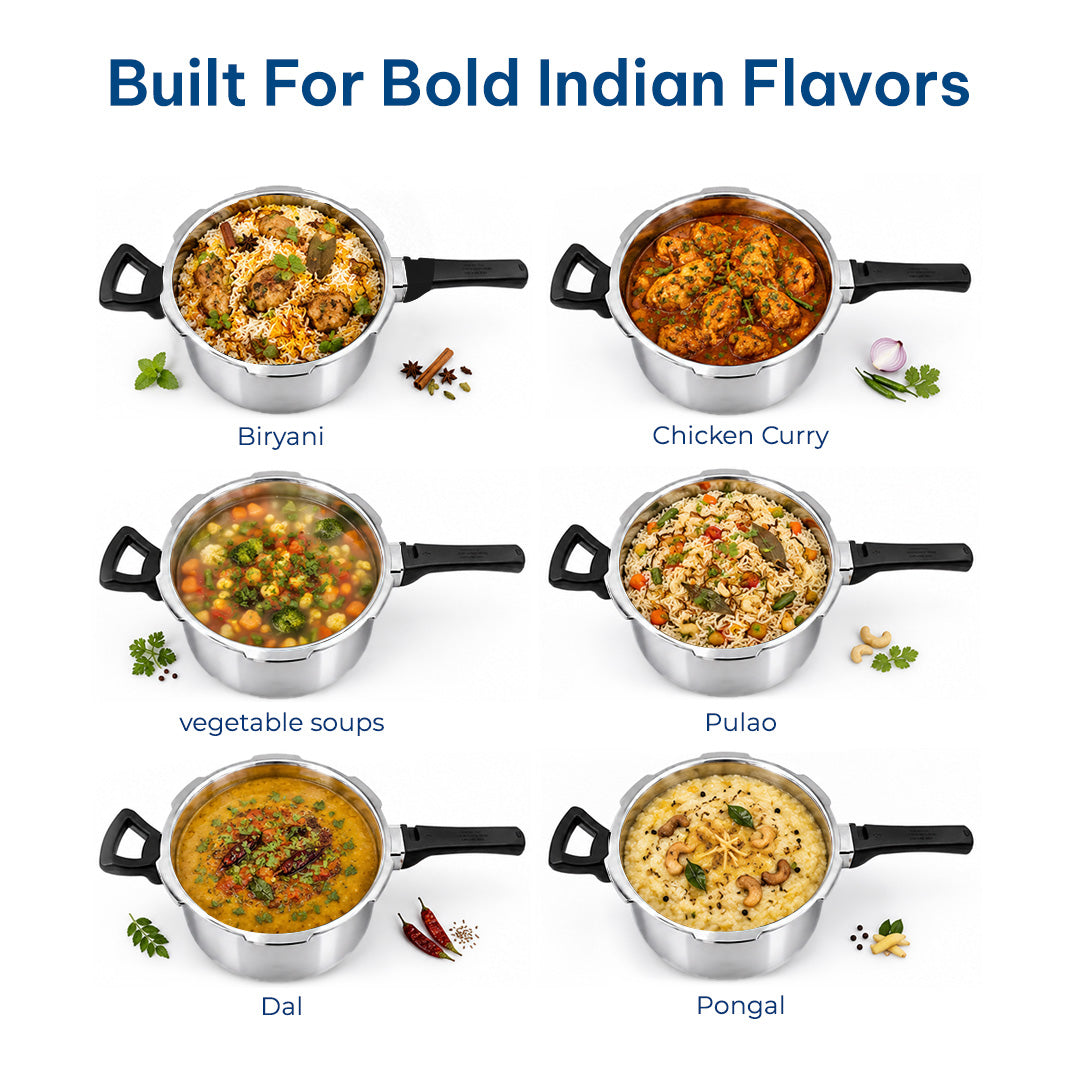
Cook rice, dals, vegetables, and curries faster while using less fuel and water. The efficient design helps you prepare wholesome meals quickly without sacrificing taste or texture.

Built for Safe & Easy Use
Featuring ergonomically designed, heat-resistant handles that stay comfortable to hold, this cooker offers a secure grip and effortless handling, even when preparing larger family meals.

One Cooker for Every Kitchen
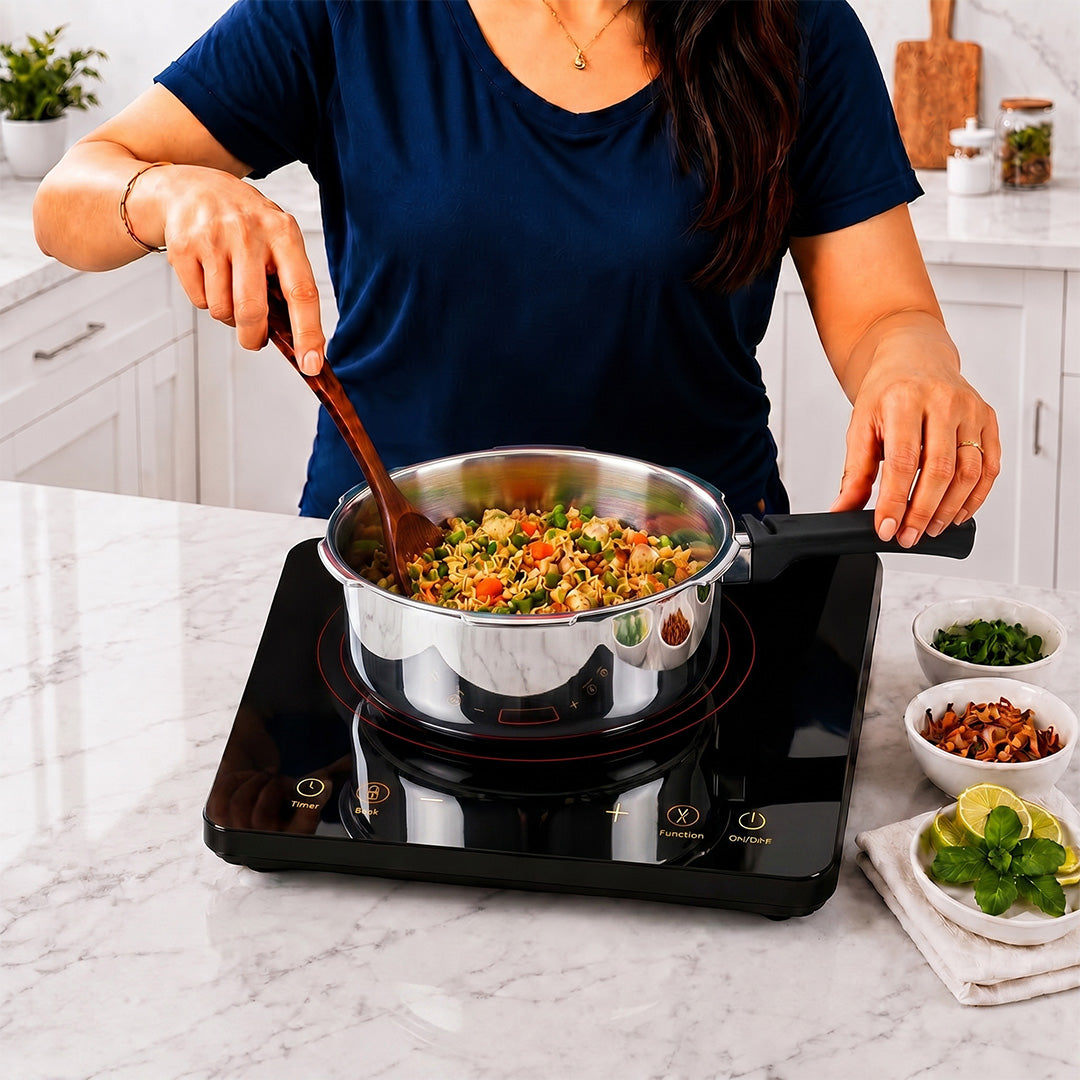
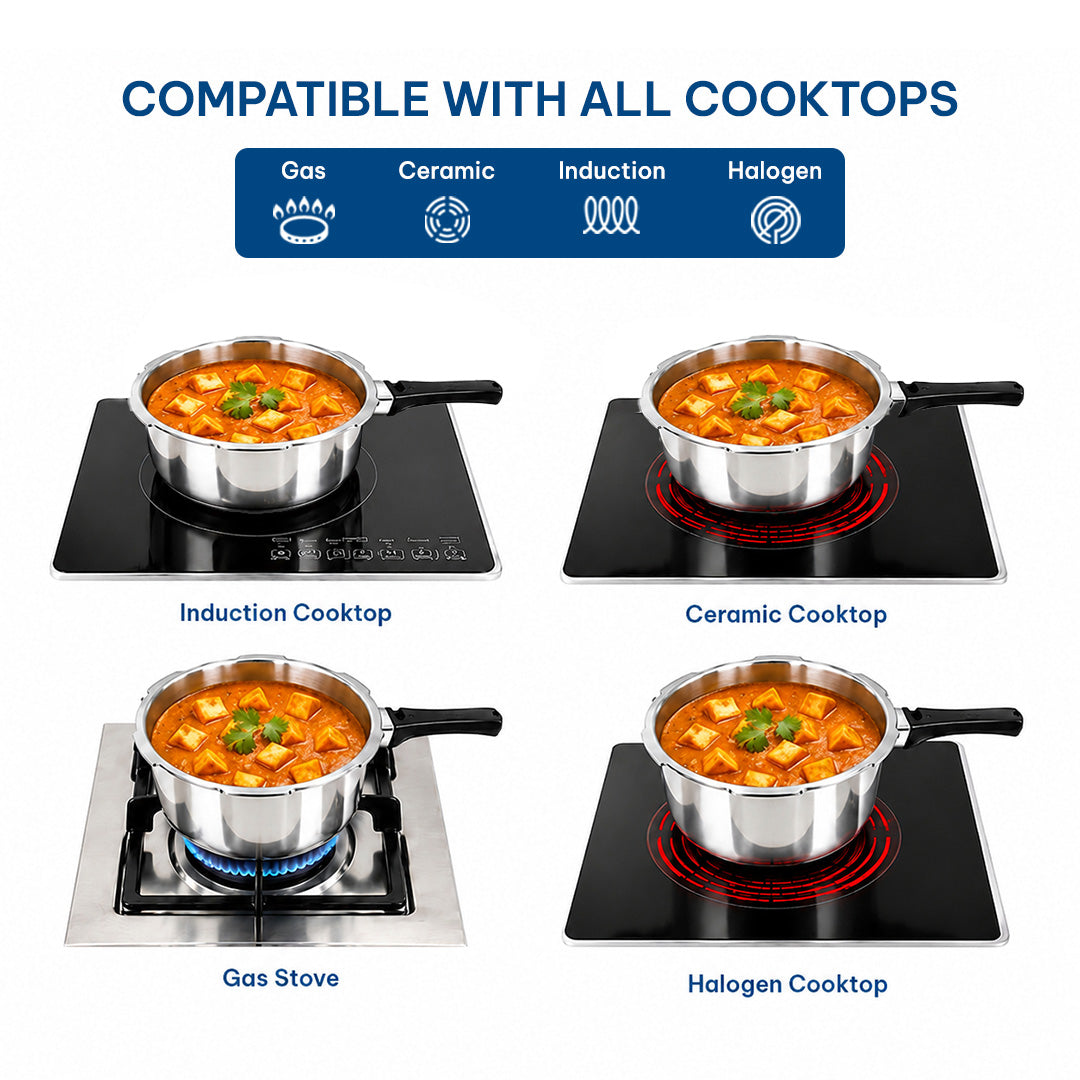
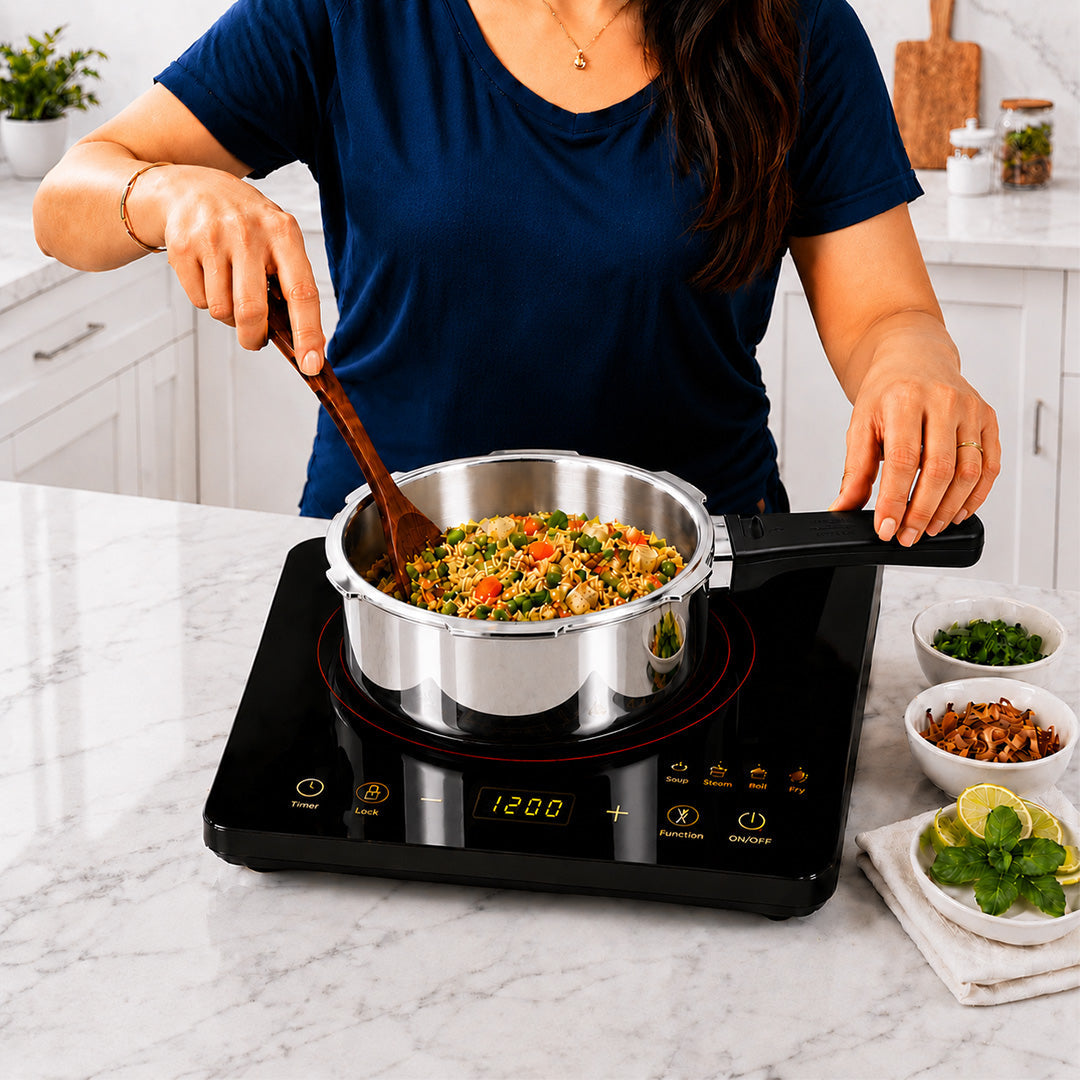
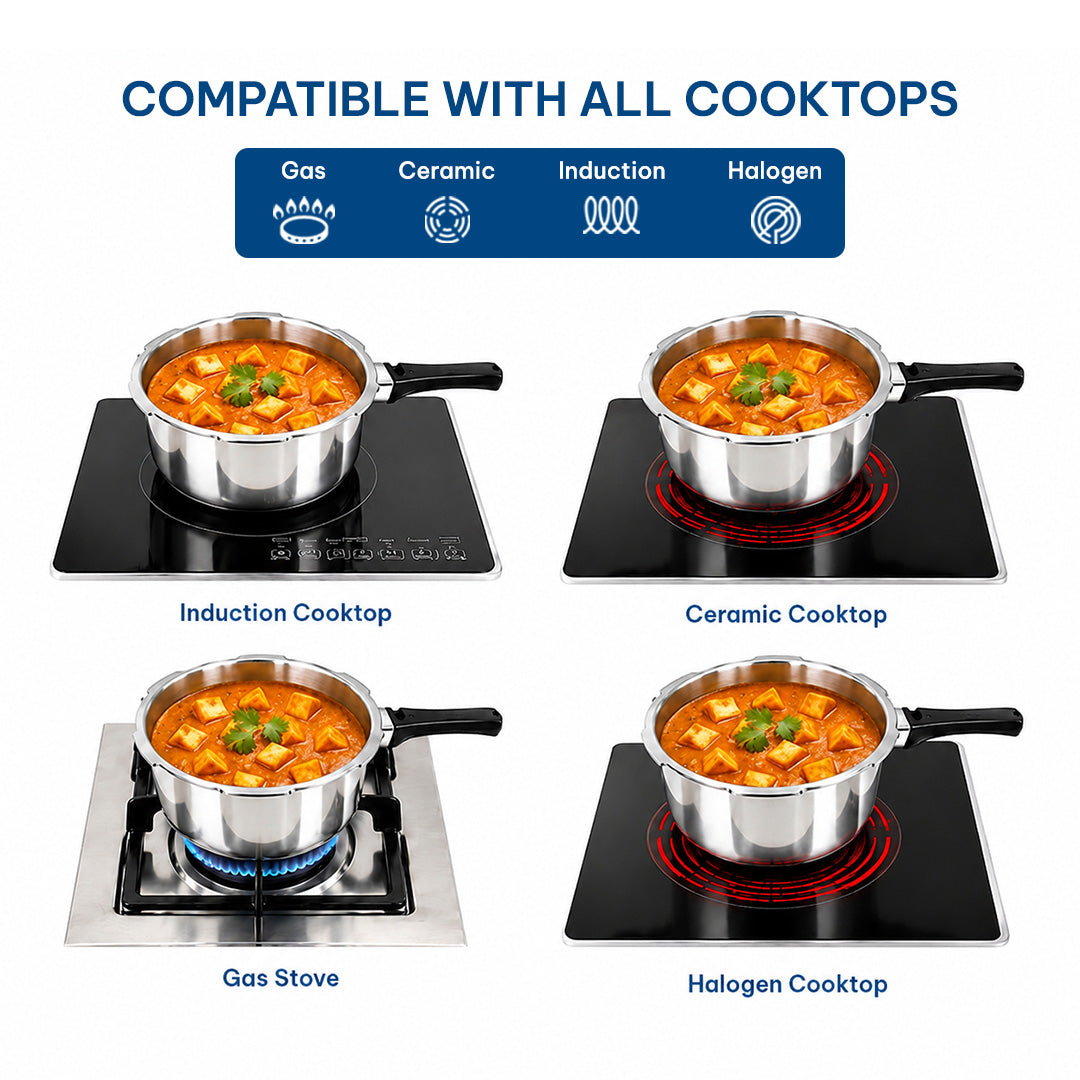
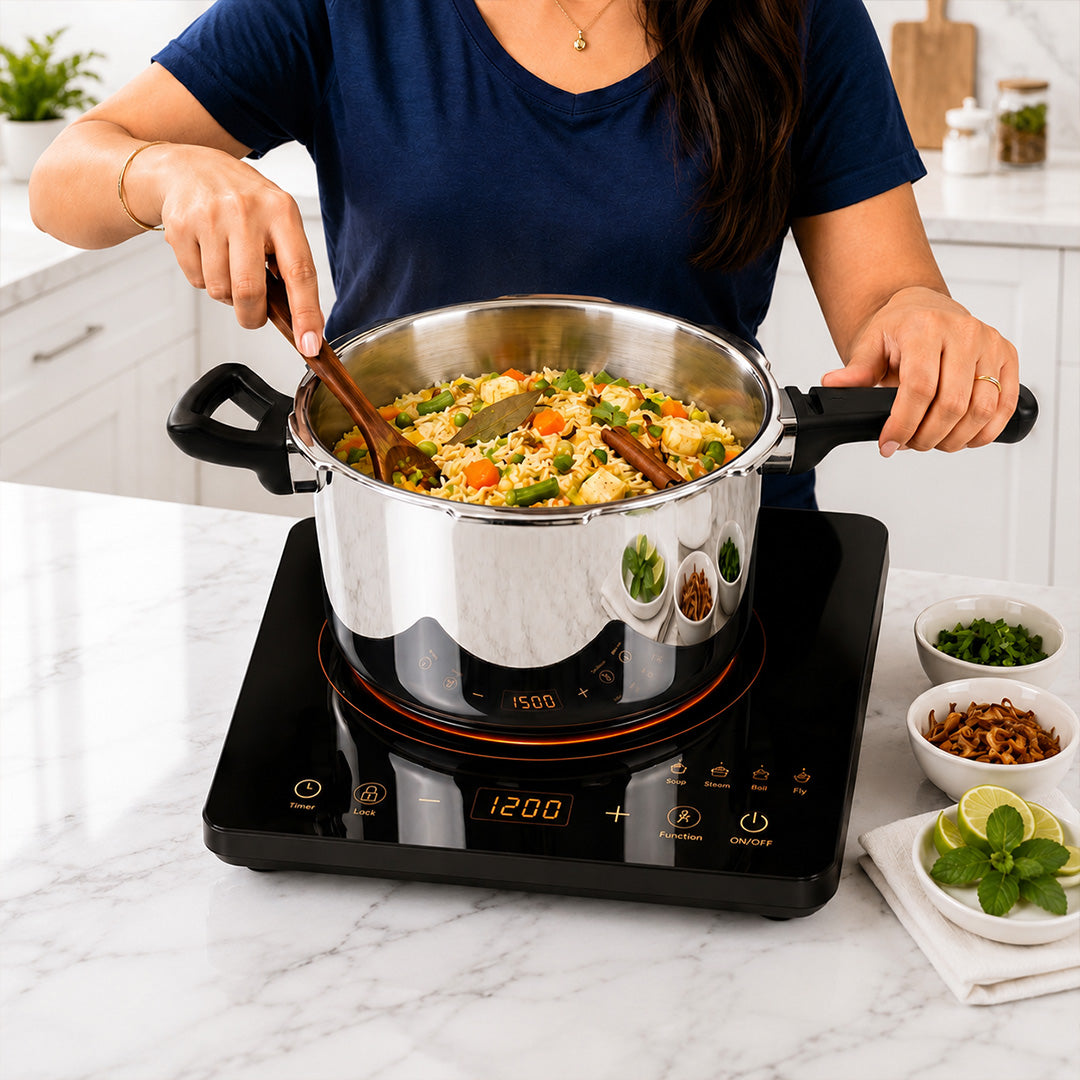
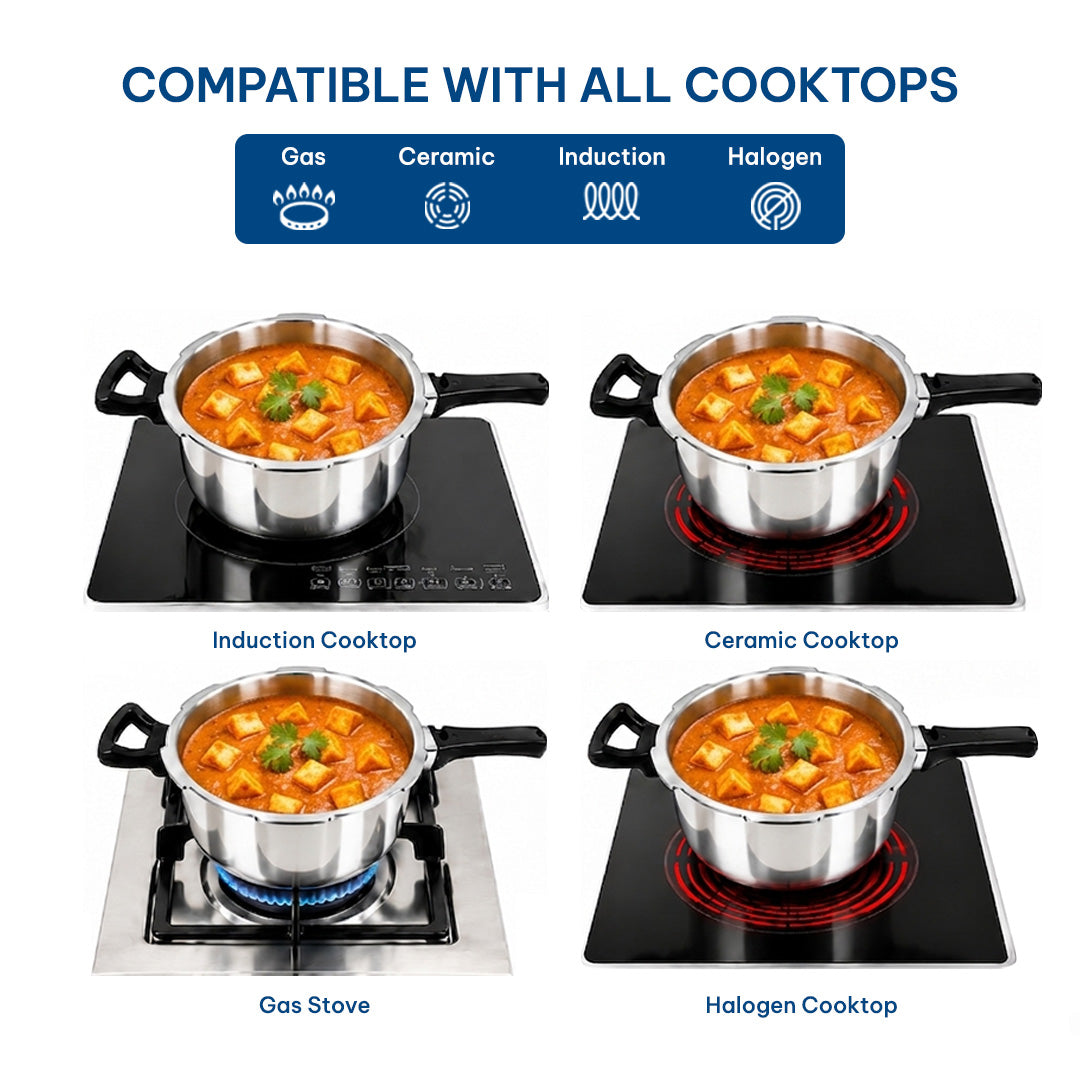
Whether you cook on induction, gas, electric, ceramic, or halogen stovetops, this versatile pressure cooker is designed to perform reliably across all cooking surfaces, making it a perfect fit for every modern kitchen.
Complete your TriPly kitchen
More from the tri-ply range — pans, kadais, tadka pans & sets.


Buyer's guide
Triply Stainless Steel Pressure Cooker — 2L, 3L and 5L
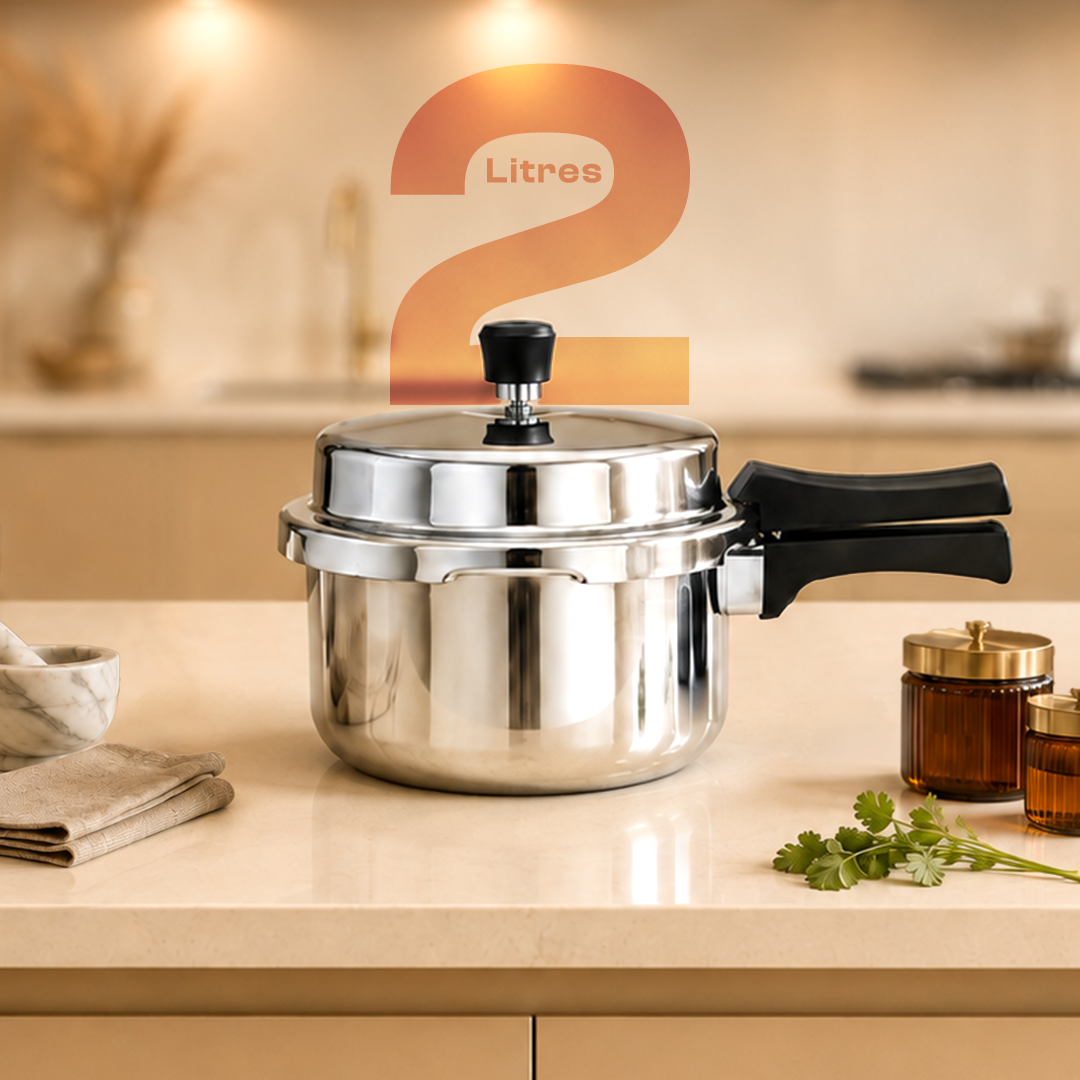
The SOLARA SeetiPro is a triply stainless steel pressure cooker built from three bonded layers: a food-grade SS 304 inner surface, an aluminium heat core, and a magnetic stainless steel outer. The aluminium is sealed between the two steel layers, so it spreads heat through the base and the walls without ever touching your food.
Which size pressure cooker should you buy?
A cooker is filled to a maximum of two-thirds — and only half full for dal and rice, which foam as they cook. So size up rather than down.
| Capacity | People | Best for |
|---|---|---|
| 2 litre | 1–2 | Couples, bachelors, hostel kitchens, small daily batches |
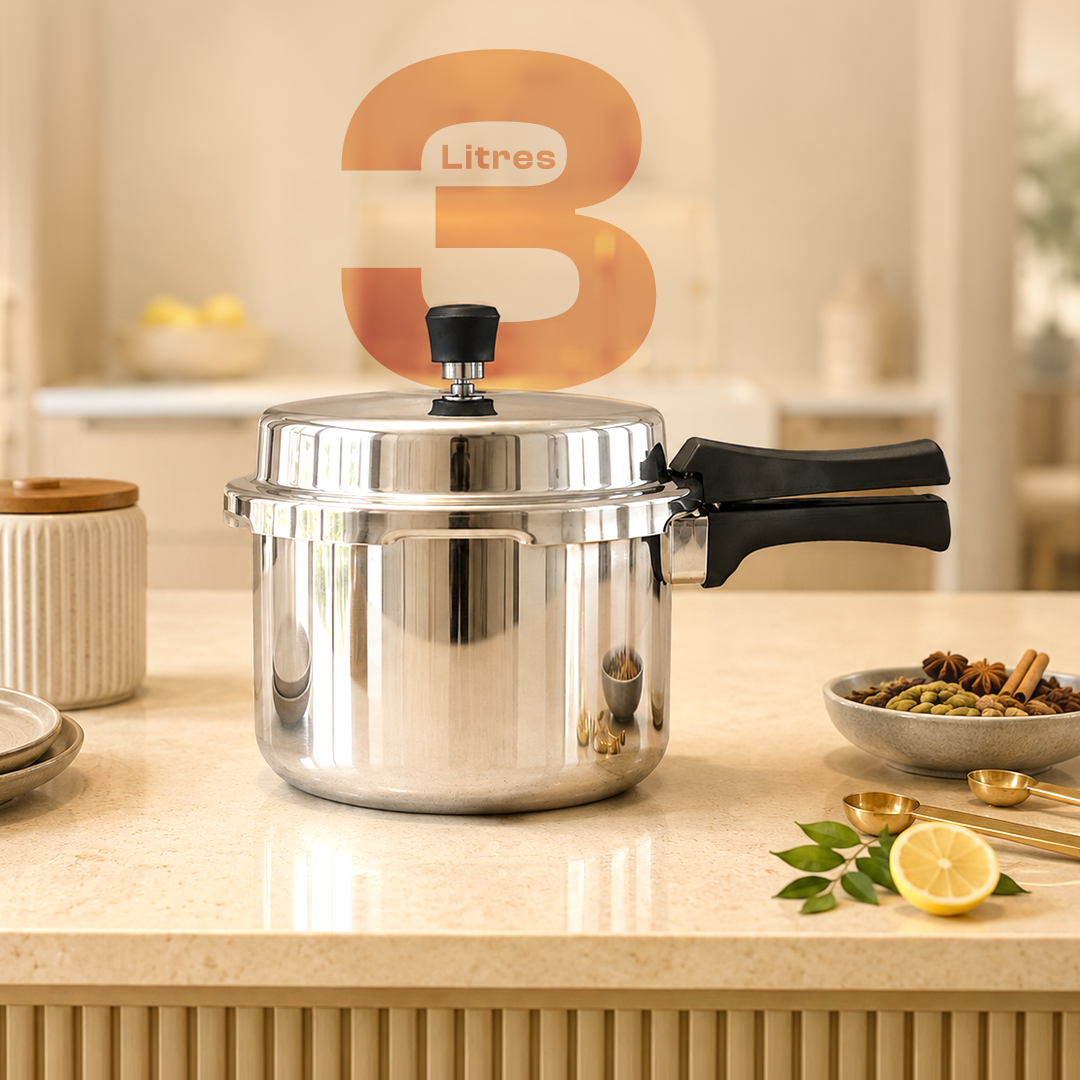
| 3 litre | 2–5 | The everyday family default — dal, rice, vegetables |
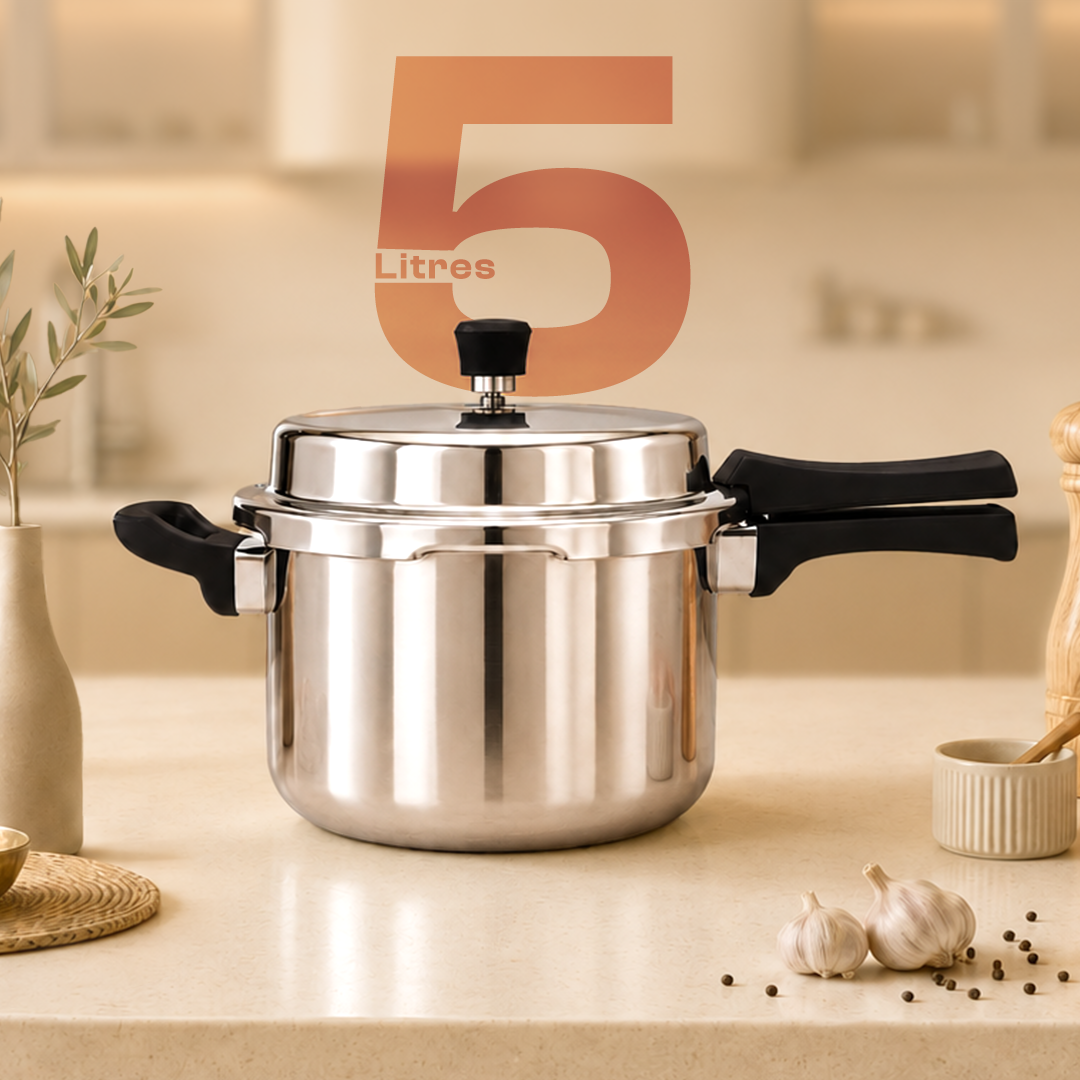
| 5 litre | 3–7 | Joint families, batch cooking, rajma, chole, biryani |
Full breakdown, including how much rice each size actually holds, is in our pressure cooker size guide.
Why triply instead of aluminium or hard-anodised?
Plain aluminium is cheap and light, but it is reactive — tomato, tamarind and lemon slowly pit the surface, and most aluminium cookers will not work on induction. Hard-anodised solves the reactivity with a hardened surface layer, but that layer can chip and cannot be repaired. Triply has no coating at all: the SS 304 inner surface is inert by nature, so there is nothing to wear off. We compare all three in stainless steel vs aluminium vs hard-anodised.
Induction, gas and every other cooktop
The flat, magnetic triply base works on induction, gas, electric, ceramic and halogen cooktops, so the cooker survives a kitchen upgrade. If you are shopping specifically for an induction base pressure cooker, a triply body is the most reliable way to get one.
Outer lid, safety valve and gasket
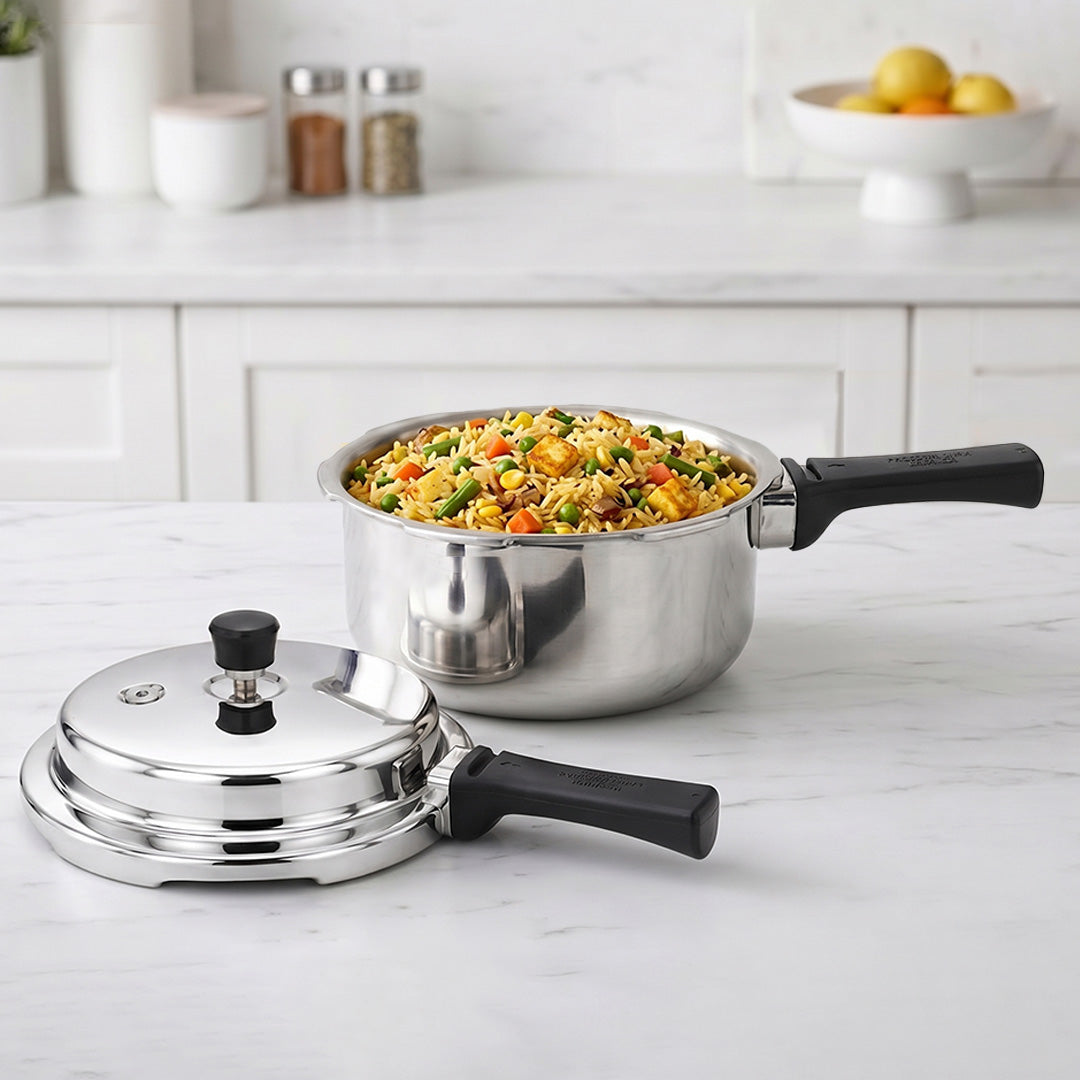
This is an outer lid pressure cooker — the lid closes over the rim, giving a wide mouth that is easier to fill, stir and serve from, and easier to clean than a narrow inner-lid opening. A safety valve vents if the main whistle ever blocks, and the gasket is a replaceable consumable on every brand; plan on a new one every 12–18 months.
Will food stick to stainless steel?
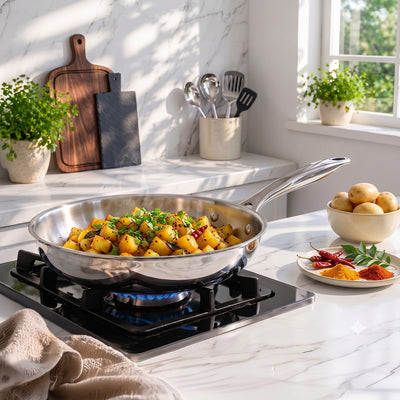
Only if it goes into a cold pan. Heat the cooker first, add oil and let it shimmer, then add your ingredients. Because a triply base spreads heat instead of concentrating it in a ring above the burner, masala browns evenly rather than catching in one spot.
Common questions
Is a 3 litre pressure cooker enough for a family of 4? Yes, for everyday dal, rice and vegetables. Choose 5 litre if you regularly cook rajma, chole or biryani for everyone in one batch.
Which pressure cooker is best for health? One with a food-grade SS 304 inner surface. It is non-reactive and carries no non-stick coating, so there is no PTFE or PFOA layer to break down at high heat.
How many whistles does dal need? Toor and moong dal usually take 3–4, chana dal 5–6, and rajma or chole 6–8 after soaking.
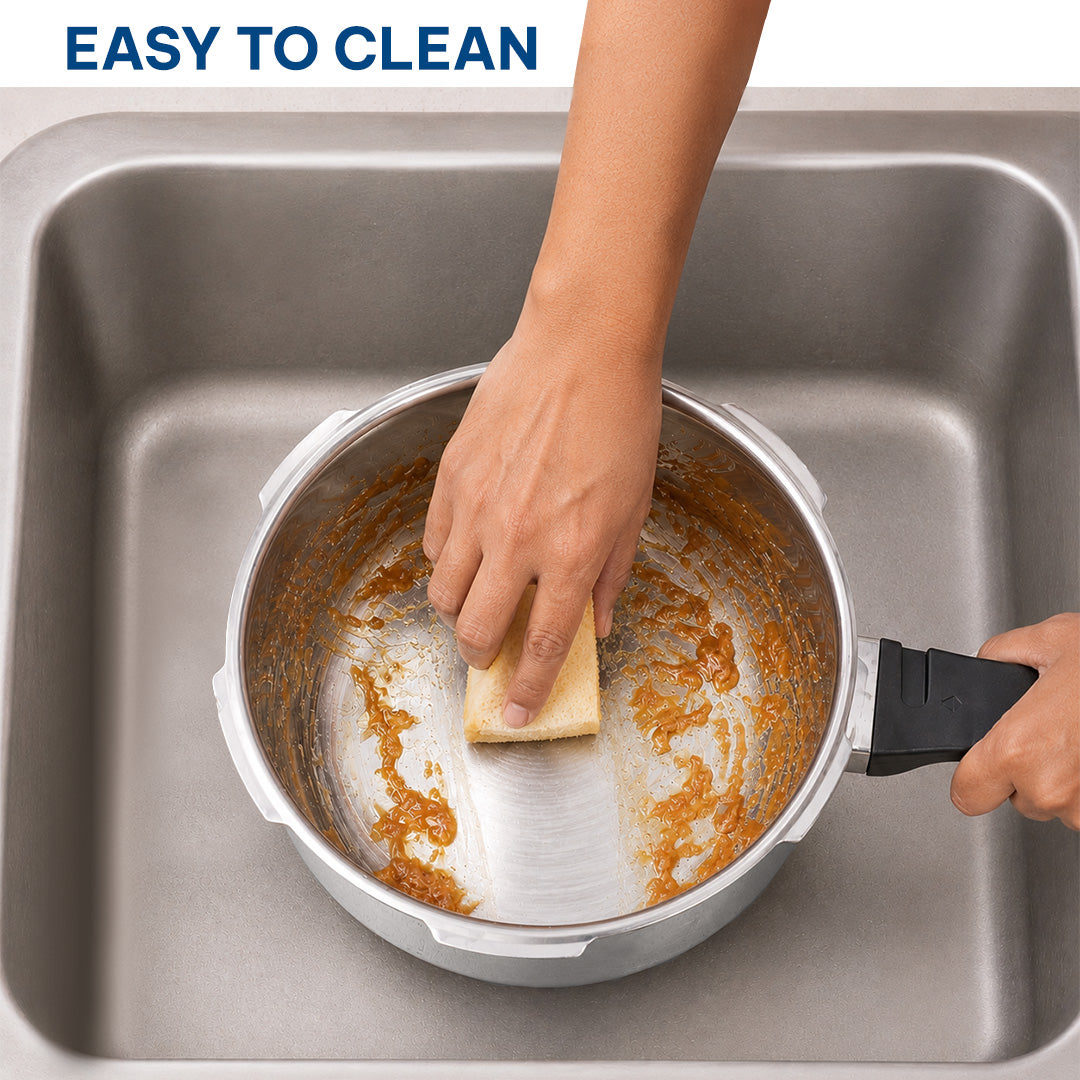
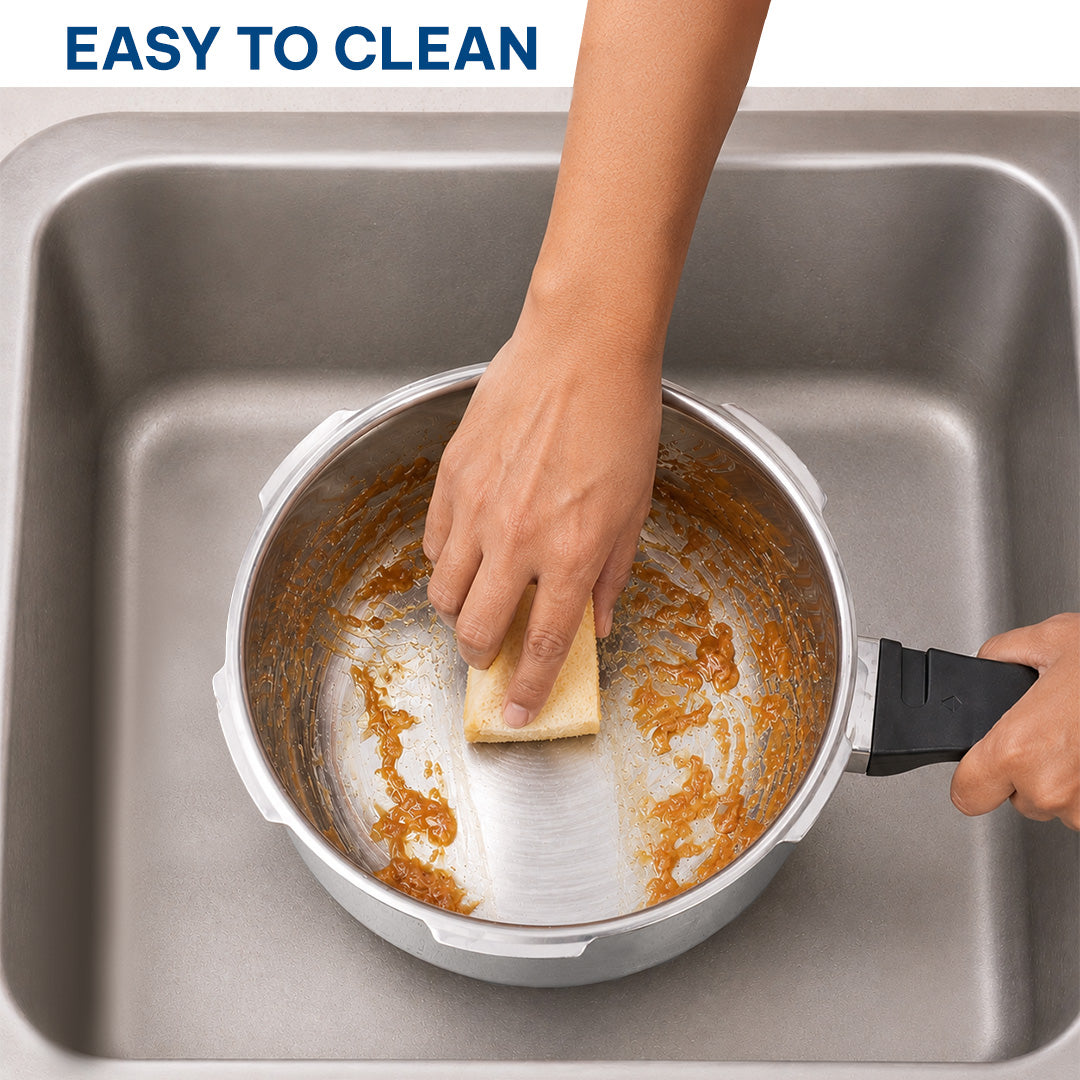
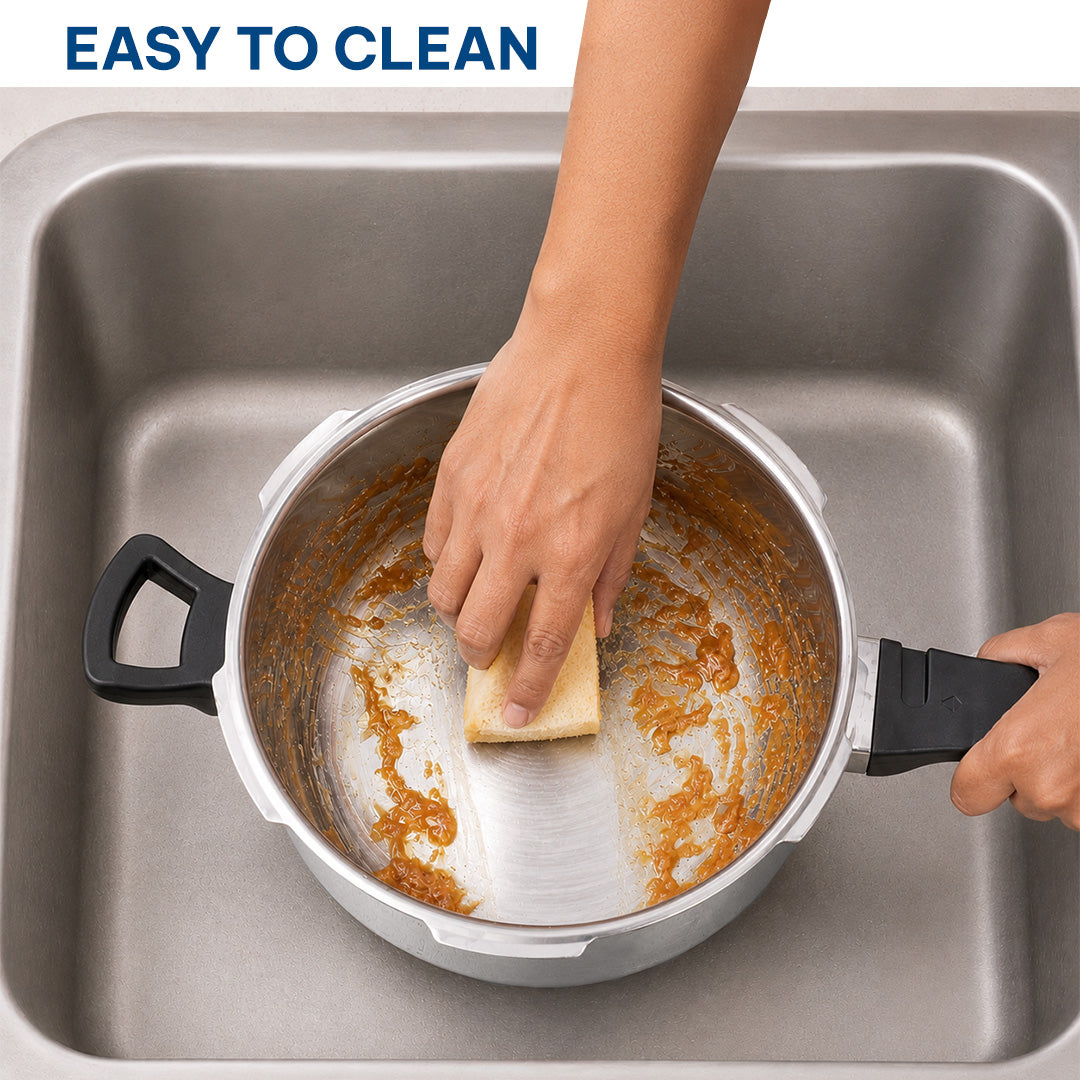
Is it dishwasher safe? The body generally is, but hand washing keeps the finish bright for longer. Always wash the gasket by hand.